
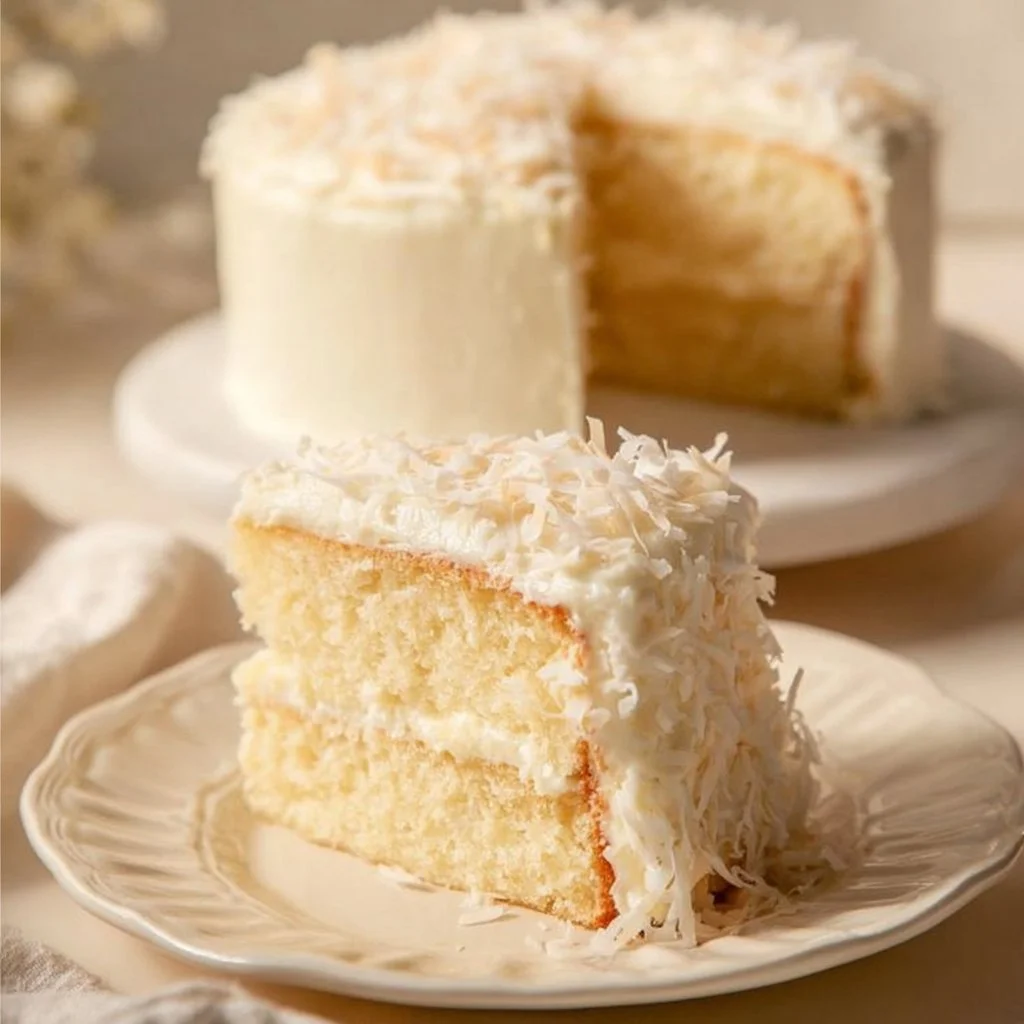
I still remember the first time I scraped coconut into a batter and the kitchen filled with that warm, tropical aroma; it felt like sunshine on a cloudy day. This coconut cake is one of those recipes that rewards the little rituals—softened butter, a careful creaming, and the gentle fold of shredded coconut—and it delivers a moist, tender crumb with silky coconut cream cheese frosting. I also like to share a lighter breakfast idea alongside it, such as these breakfast pancake poppers, when guests linger after brunch.
Hands-on steps are straightforward and the bake time is about 25-30 minutes, so it’s a reliably moderate project for home bakers. What makes this special is the contrast between the plush cake and the tangy, creamy frosting; this recipe is for anyone who loves coconut textures and a bright, cozy dessert that’s both nostalgic and bold.
Why you’ll love this
- Moist crumb that stays tender slice after slice
- Coconut flavor without overwhelming sweetness
- Simple pantry ingredients, solid technique, repeatable results
- Frosting that’s creamy, tangy, and easy to spread
- Looks elegant with minimal effort
"A perfect balance of coconut and cream cheese; friends begged for the recipe."
How this recipe comes together
Start by creaming butter and sugar, then add the eggs and vanilla for lift and flavor. Dry ingredients are mixed separately and added alternately with coconut milk to preserve a light, moist crumb. Bake the batter in prepared pans, cool briefly, then finish with a smooth coconut cream cheese frosting and a sprinkle of shredded coconut.
[Image cue: First step — creaming butter and sugar]
What you’ll need
- 2 cups all-purpose flour
- 1 1/2 cups sugar
- 1/2 cup unsalted butter, softened
- 1 cup coconut milk
- 1/2 cup shredded coconut
- 4 large eggs
- 1 tablespoon baking powder
- 1 teaspoon vanilla extract
- 1/2 teaspoon salt
- For the frosting:
- 1 cup cream cheese, softened
- 1/2 cup unsalted butter, softened
- 2 cups powdered sugar
- 1/4 cup coconut milk
- 1/2 cup shredded coconut
Ingredient notes & swaps:
- Role: 1/2 cup unsalted butter and 1 cup cream cheese provide tenderness and tang in cake and frosting.
- Swap: coconut milk gives coconut flavor; you can optionally use a neutral milk if coconut milk is unavailable. (optional)
- Allergen callout: contains wheat, eggs, dairy, and coconut; please note for guests with allergies.
- Texture tip: keep shredded coconut to 1/2 cup in the batter so it adds chew without weighing the cake down.
Trust touch: I always use room-temperature butter and cream cheese because they incorporate better, producing a smoother frosting and a lighter crumb.
How to make it
This cake is built on a classic creaming method with a simple fold-in of coconut and an easy cream cheese frosting that whips up smooth and spreadable.
- Preheat the oven and prepare two 9-inch round cake pans by greasing and flouring them.
- In a large bowl, cream together the butter and sugar until light and fluffy.
- Beat in the eggs one at a time, then stir in the vanilla.
- In another bowl, combine the flour, baking powder, and salt. Gradually add to the creamed mixture alternately with the coconut milk.
- Stir in the shredded coconut.
- Pour the batter into the prepared pans and bake until a toothpick inserted into the center comes out clean.
- Let cakes cool in pans briefly, then remove to wire racks to cool completely.
- For the frosting, beat the cream cheese and butter together until smooth. Gradually add powdered sugar and coconut milk, mixing until creamy.
- Frost the cooled cakes with the coconut cream cheese frosting and sprinkle with additional shredded coconut if desired.
Pro Tip: When alternating dry ingredients with the coconut milk, start and finish with the dry ingredients and fold gently to avoid overworking the batter.
Visual doneness cues:
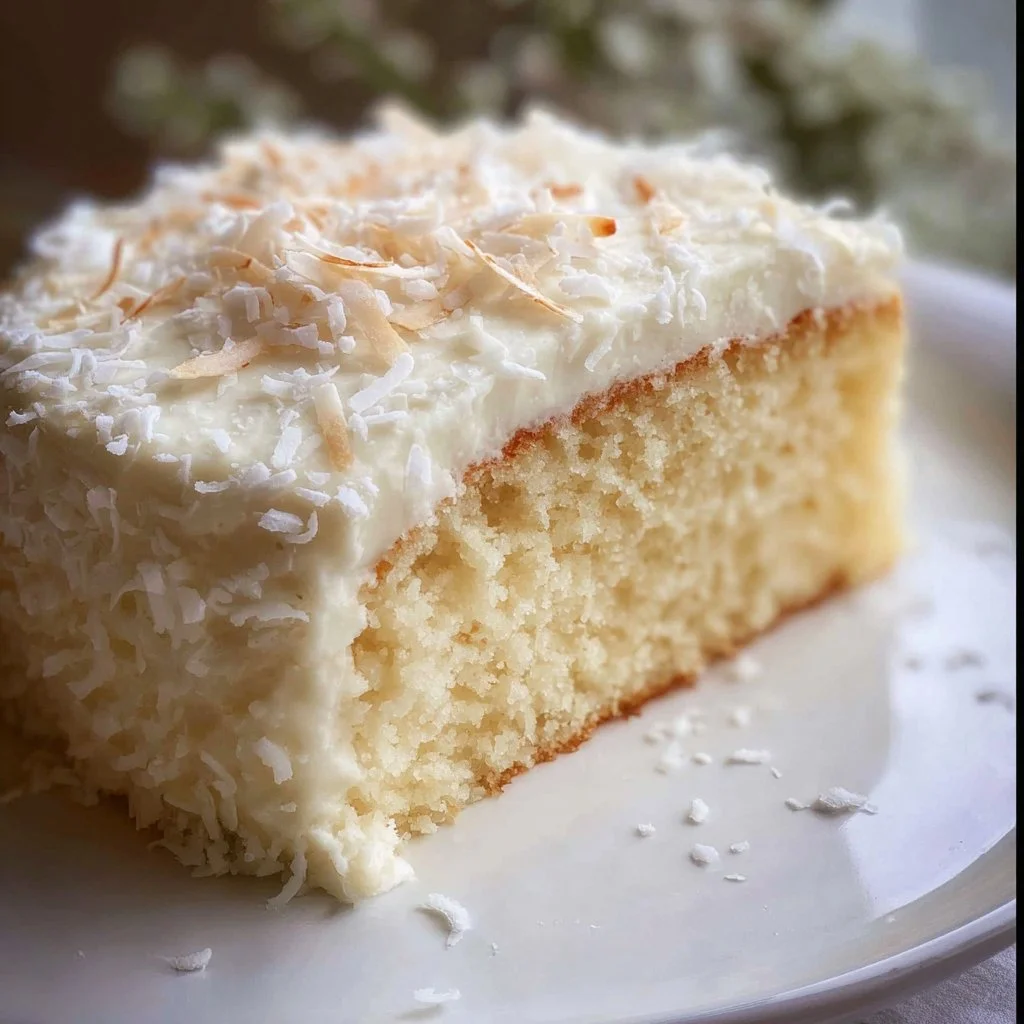
- The tops should be lightly golden and spring back gently when pressed.
- A clean toothpick from the center is the best sign; the cake should smell fragrant, with a warm coconut note.
Helpful cooking tips
- Use room-temperature eggs and butter to ensure smooth emulsification and better rise.
- Don’t overmix once flour is added; stop when just combined for a tender crumb.
- Cool layers on a wire rack to avoid trapped steam and soggy tops.
- If frosting seems too stiff, add a splash of the coconut milk, one teaspoon at a time.
- Toasted shredded coconut (optional) adds a crunchy contrast if you prefer texture.
Serving suggestions
Serve simple slices with a dusting of extra shredded coconut and a steaming cup of coffee or tea. For brunch, pair with fresh tropical fruit or spooned yogurt to cut the sweetness; for dessert, a wedge with a light drizzle of coconut milk makes an elegant plate. For a casual presentation, layer the frosted cakes and press extra coconut into the sides for a rustic yet polished look.
[Image cue: Serving — slice on a white plate]
How to store & freeze
To keep the texture and flavor, store the frosted cake loosely covered in the refrigerator. If you need to freeze, wrap cooled, unfrosted layers tightly and freeze; thaw completely before frosting for best results. Because this recipe includes eggs and dairy, refrigerate leftovers within 2 hours; reheat until steaming hot when serving warm slices.
Troubleshooting
If the cake is dry: you may have overbaked or overmixed; try shortening bake time slightly next time and mix gently once flour is added.
If it’s dense or heavy: ensure eggs and butter were at room temperature and that the creaming step was thorough to incorporate air.
If frosting splits or is runny: chill the mixture briefly and beat again; softened cream cheese works best when fully smooth before adding powdered sugar.
If the center sinks: avoid opening the oven door during the critical rise period and ensure baking powder is fresh.
Flavor swaps
- Add zest of lime or lemon for a citrus lift (optional).
- Fold in a handful of toasted shredded coconut on top for crunch (optional).
- Stir in a small amount of vanilla bean paste for intensified flavor (optional).
All optional swaps keep the core method the same and won’t require changing the main ingredient amounts.
Common questions
Q: Can I use sweetened shredded coconut instead of plain?
A: Yes; sweetened coconut will increase overall sweetness and can darken faster during baking. Adjust frosting sweetness mentally and consider toasting shredded coconut separately for added depth.
Q: Can I make this into cupcakes?
A: You can portion the batter into lined muffin tins; baking time will be shorter, so watch for a clean toothpick and a domed, springy top. Cooling completely before frosting remains important.
Q: How do I get a smooth, spreadable frosting?
A: Beat cream cheese and butter until completely smooth, then add powdered sugar in batches and thin with coconut milk as needed for spreadability. Cold ingredients can lead to lumps.
Q: Is shredded coconut necessary inside the batter?
A: It adds chew and visible coconut flavor; omitting it will yield a smoother crumb but less coconut texture. You can reserve the 1/2 cup for topping if preferred.
Q: Can I toast the shredded coconut?
A: Yes, toasting intensifies nutty flavor; do it separately and cool before sprinkling as a garnish to preserve crispness.
Conclusion
If you’d like a reference for a tried-and-true, classic version to compare techniques or presentation, I often look to trusted baker resources like Fluffy & Moist Coconut Cake – Sally’s Baking Addiction for inspiration and plating ideas.