
I still remember the first time I coaxed a pan of rice into a glossy, spoonable dinner; it felt like magic. I’m delighted to share this spring pea risotto because it makes weeknights feel special with minimal fuss. This spring pea risotto takes about 18–20 minutes of active stirring during the cooking stage and uses straightforward ingredients for a vibrant result. If you want a bright, crunchy side, try this chickpea feta avocado salad alongside it.
There’s something comforting about the creamy texture, the bright pop of fresh peas, and the nutty finish from Parmesan. It’s great for casual dinners, small dinner parties, or a solo meal when you want something both soothing and impressive.
Why you’ll love this
- Creamy texture with fresh pea brightness.
- Reliable technique that produces consistent results.
- Uses pantry-friendly Arborio rice and simple stock.
- Minimal hands-on ingredients, maximum flavor payoff.
- Makes a cozy, elegant centerpiece with few dishes.
"Perfectly creamy and bright; everyone asked for seconds."
How this recipe comes together
Warm stock, softened onion and garlic, toasted Arborio rice, and patient ladling of liquid create a silky risotto. Finish with fresh peas and grated Parmesan for a bright, nutty finale. The process is simple and rhythmic: warm, stir, add, repeat until the rice is creamy and al dente.
What you’ll need
- 1 cup Arborio rice
- 4 cups vegetable or chicken stock
- 1 cup fresh spring peas
- 1 small onion, finely chopped
- 2 cloves garlic, minced
- 1/2 cup white wine (optional)
- 1/2 cup grated Parmesan cheese
- 2 tablespoons olive oil or butter
- Salt and pepper to taste
- Fresh mint or parsley for garnish (optional)
Ingredient notes & swaps:
- Role: Arborio rice gives the risotto its creamy, starchy body; warm stock helps the rice cook evenly.
- Swap: Use vegetable stock to keep it vegetarian; chicken stock adds extra richness.
- Peas: Fresh spring peas are prized for sweetness; frozen peas can work if thawed.
- Allergen callout: Parmesan cheese contains milk; omit or use a dairy-free alternative if avoiding dairy.
How to make it
Warm the stock while you sweat onion and garlic, toast the Arborio, deglaze with wine if using, then add the stock ladle by ladle until the rice is creamy and al dente. Stir in peas, finish with Parmesan, and season.
- In a saucepan, heat the stock over low heat. In a large skillet, heat olive oil or butter over medium heat. Add chopped onion and garlic, and sauté until translucent.
- Add Arborio rice and stir for 1-2 minutes until slightly toasted.
- Pour in the white wine, if using, and stir until absorbed.
- Begin adding the warmed stock, one ladle at a time, stirring frequently until the liquid is absorbed before adding more. Continue this process for about 18-20 minutes.
- When the rice is creamy and al dente, stir in the fresh peas and cook for another 2-3 minutes.
- Remove from heat, stir in Parmesan cheese, and season with salt and pepper.
- Serve warm, garnished with fresh mint or parsley if desired.
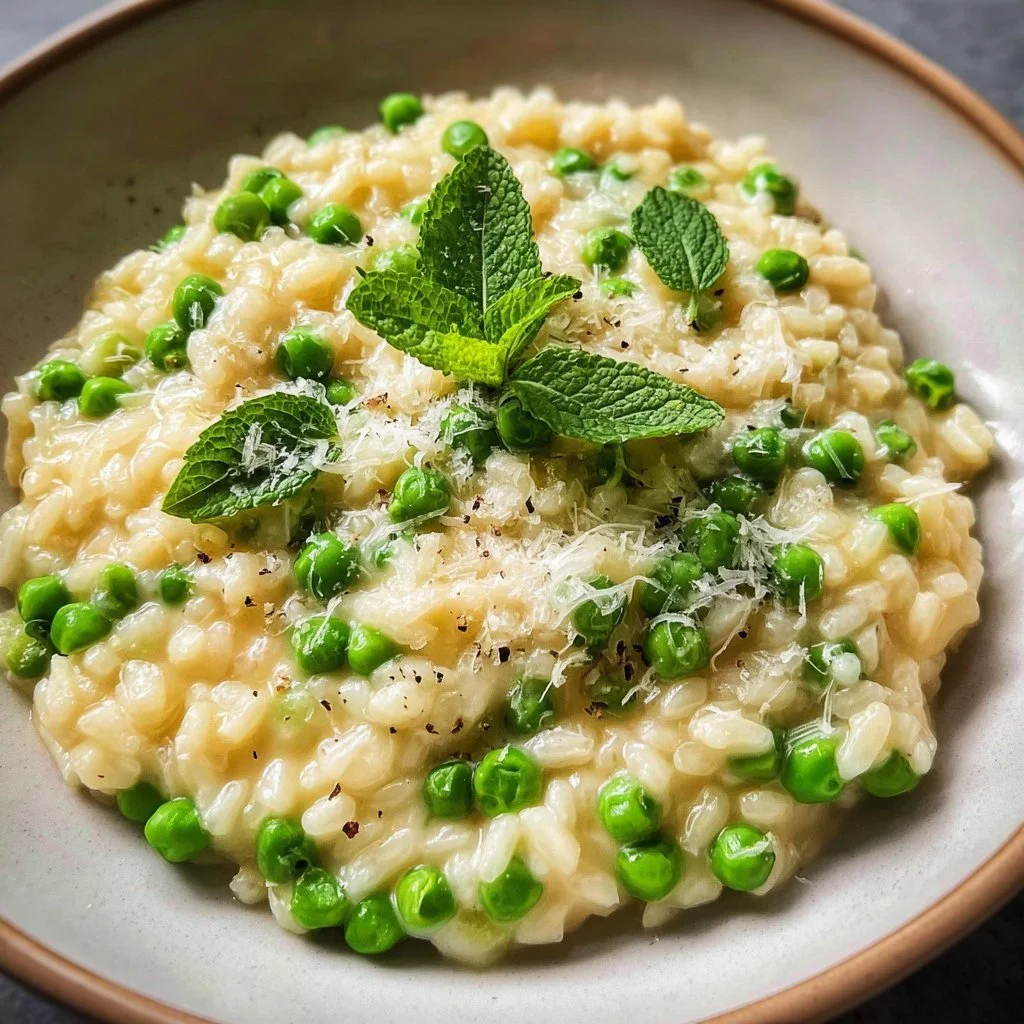
Pro Tip: Keep the stock warm while you ladle; adding cold stock slows the cooking and can make the grains uneven.
Trust touch: I always warm the stock and toast the Arborio briefly; those two small steps deliver more consistent creaminess and even cooking.
Visual doneness cues:
- The rice should be glossy and slightly loose, not dry.
- A spoonful should show individual grains with just a tiny white center when bitten; the texture should feel creamy on the tongue.
- The peas should be bright green and tender with a little snap left.
Before you start
Make sure the stock is on low heat before you begin. Having a ladle and a wooden spoon at hand keeps the rhythm steady and comfortable.
Helpful cooking tips
- Stir often but don’t obsess; frequent stirring helps release starch and create creaminess.
- Toast the rice briefly to add a subtle nutty aroma before adding any liquid.
- If skipping wine, just proceed with warmed stock; the rice will still develop great flavor.
- Fresh peas should be added near the end to preserve their color and sweet snap.
- Use a wide skillet for more surface area and better evaporation control.
Best ways to enjoy it
Serve the risotto spooned into shallow bowls with a scattering of fresh mint or parsley and an extra dusting of Parmesan. Pair it with a simple green salad or roasted vegetables; the risotto’s creaminess balances crisp, acidic sides well. For a light meal, a leafy salad complements the rice; for something heartier, add a simply cooked protein on the side.
How to store & freeze
Cool leftovers slightly before transferring to an airtight container and refrigerating. Risotto will thicken in the fridge; loosen with a splash of warmed stock or water when reheating to restore creaminess. Refrigerate leftovers within 2 hours; reheat until steaming hot.
How to fix common issues
- If it’s too dry: Stir in warmed stock a little at a time until silkier.
- If it’s bland: Finish with more Parmesan and salt; acid like lemon would help, but mark any additions optional.
- If it’s soggy: The rice was overcooked; try serving as a thicker, spoonable dish and reduce added liquid next time.
- If peas are dull: Add them at the very end next time to keep color and brightness.
Creative twists
- Add fresh herbs at the end for extra brightness; stir in parsley or mint just before serving.
- Stir in a splash of the wine only if you like a subtle tang; otherwise omit.
- For a heartier option, fold in some crisped pancetta or cooked shrimp (optional) just before serving.
- Swap Parmesan for a different hard cheese if you prefer, keeping in mind dairy content.
Your questions answered
Q: Can I use frozen peas instead of fresh?
A: Yes, frozen peas can be used; thaw them first and add them at the end of cooking to avoid over-softening. They won’t be quite as vibrant as fresh, but they maintain sweetness and texture when added late.
Q: Is the white wine necessary?
A: No. The wine is optional and adds a subtle acidity; if you prefer not to use alcohol, skip that step and continue with warmed stock. The rice will still become creamy and flavorful.
Q: Can I make this ahead for a dinner party?
A: You can prepare risotto shortly before guests arrive and keep it slightly underdone; finish by stirring in peas and Parmesan just before serving. Reheating can be done with warmed stock to revive the creaminess.
Q: How can I keep the risotto creamy when reheating?
A: Reheat gently while stirring, adding warmed stock or water one spoonful at a time until the desired texture returns. Avoid high heat that can cause separation or dryness.
Conclusion
For a slightly different take or plating inspiration, see the spring pea risotto inspiration at spring pea risotto inspiration at Feasting At Home.
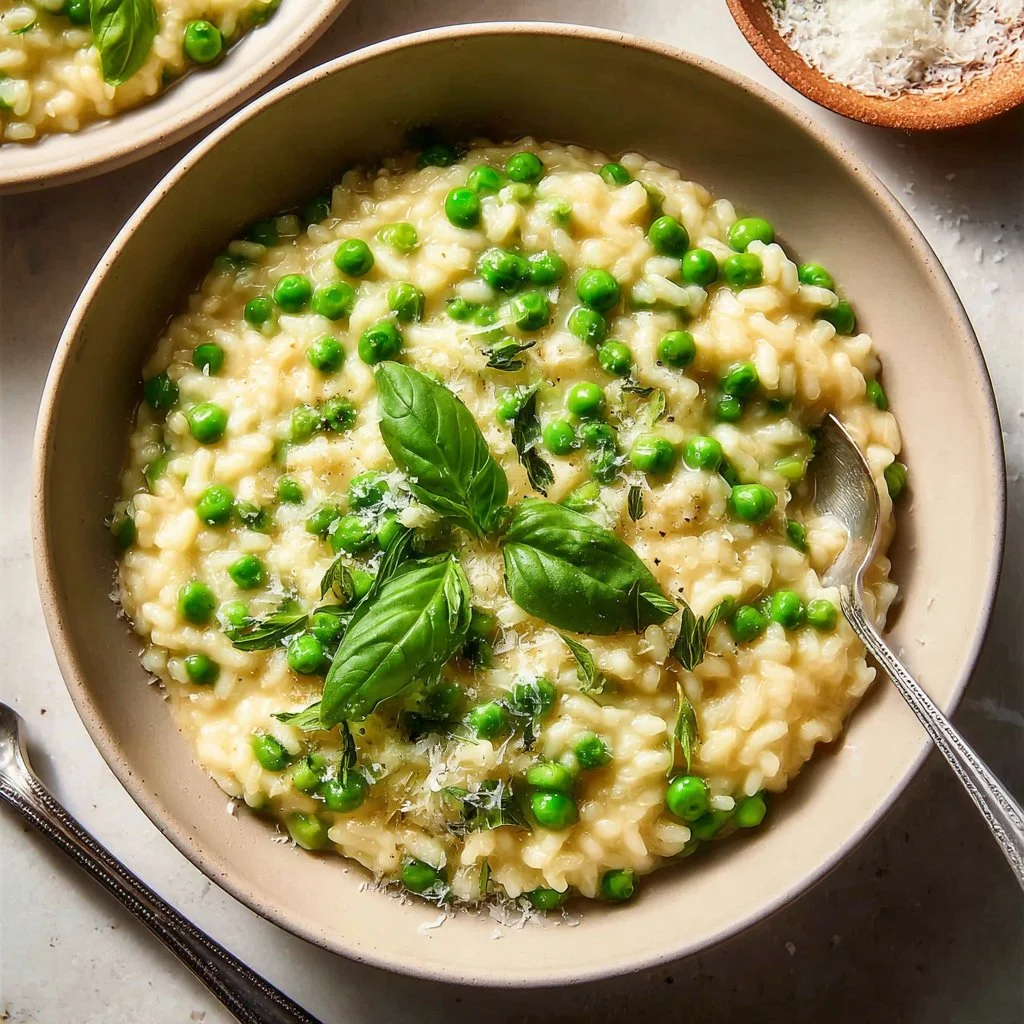
Spring Pea Risotto
Ingredients
Method
- In a saucepan, heat the stock over low heat.
- In a large skillet, heat olive oil or butter over medium heat.
- Add chopped onion and garlic, and sauté until translucent.
- Add Arborio rice and stir for 1-2 minutes until slightly toasted.
- Pour in the white wine, if using, and stir until absorbed.
- Begin adding the warmed stock, one ladle at a time, stirring frequently until the liquid is absorbed before adding more.
- Continue this process for about 18-20 minutes until the rice is creamy and al dente.
- When the rice is ready, stir in the fresh peas and cook for another 2-3 minutes.
- Remove from heat, stir in Parmesan cheese, and season with salt and pepper.
- Serve warm, garnished with fresh mint or parsley if desired.