
I still remember the first time I pan-fried a batch of irish potato cakes for a snowed-in Sunday; the kitchen smelled like warm butter and green onion, and the first bite was pure comfort. I make these whenever I want something inexpensive, reliable, and a little indulgent. If you’d like a heartier plate alongside them, see my note on traditional Irish meat and potatoes for pairing ideas.
These cakes are easy enough for a weeknight and forgiving when the mashed potatoes vary a bit in moisture.
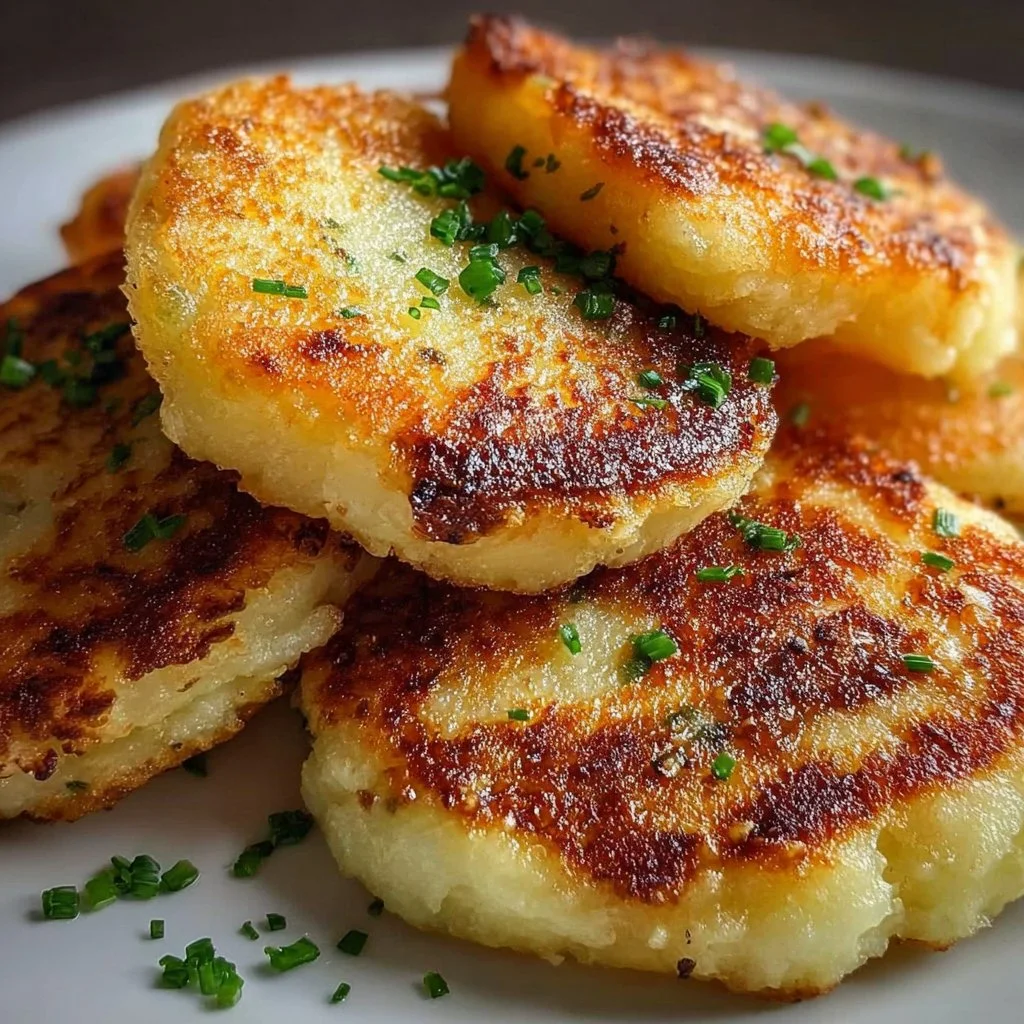
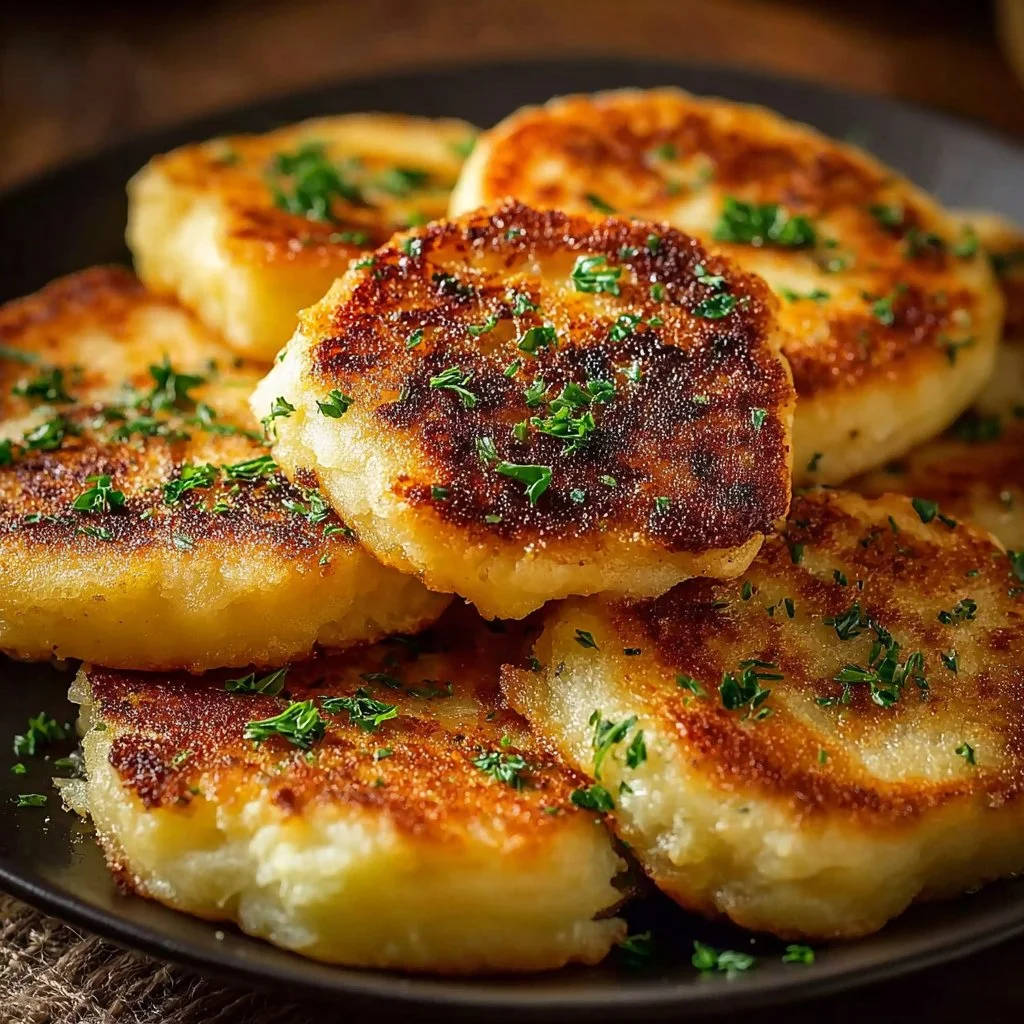
They’re special because the outside crisps to a golden, crackling brown while the interior stays pillowy and soft. The scallion bite and optional melted cheese add bright and savory layers. This recipe is for anyone who loves texture contrast and simple, satisfying food.
Why you’ll love this
- Fast comfort using pantry basics.
- Crispy exterior with a tender interior.
- Makes a crowd-pleasing side or light main.
- Stretch leftover mashed potatoes easily.
- Low-waste, budget-friendly cooking.
"Perfectly crisp outside, pillowy inside — a new family favorite."
Step-by-step overview
A simple dough of mashed potatoes, flour, baking powder, salt, and pepper is mixed, optionally folded with green onions and cheese, shaped into eight patties, dusted with flour, and pan-fried in butter until golden and crisp on both sides. They’re drained briefly and served warm for best texture. [Image cue: First step]
What you’ll need
- 2 cups mashed potatoes
- 1 cup all-purpose flour
- 1 teaspoon baking powder
- 1 teaspoon salt
- 1/2 teaspoon black pepper
- 1/4 cup chopped green onions (optional)
- 1/4 cup shredded cheese (optional)
- 1/4 cup butter (for frying)
Ingredient notes & swaps:
- Role: all-purpose flour and baking powder give structure and light lift to the potato dough.
- Swap idea: if you prefer a gluten-free option, a direct flour swap is not listed here; proceed cautiously and test small batches. (Allergen note: this recipe contains gluten and dairy from flour, butter, and optional cheese.)
- Trust touch: using 2 cups mashed potatoes keeps the dough forgiving and easy to shape, so your cakes hold together during frying.
How to make it
Start by combining the mashed potatoes with flour, baking powder, salt, and black pepper until a cohesive dough forms. Fold in green onions and cheese if you’re using them, shape into eight patties on a floured surface, dust them lightly with flour, then fry in butter until each side is golden and crisp. The process is straightforward and yields reliably textured cakes.
- In a large bowl, combine the mashed potatoes, flour, baking powder, salt, and black pepper. Mix until a dough forms.
- If using, fold in the chopped green onions and shredded cheese until evenly distributed.
- Turn the dough out onto a floured surface. Divide it into 8 equal portions and shape each portion into a patty, about 1/2 inch thick.
- Dust the patties lightly with flour to prevent sticking.
- Heat a large skillet over medium heat and add the butter. Once melted and bubbling, add the potato cakes to the skillet in batches, being careful not to overcrowd.
- Cook for about 4-5 minutes on each side or until golden brown and crispy.
- Remove the cakes from the skillet and place them on a paper towel-lined plate to absorb excess grease.
- Serve warm.
Pro Tip: after shaping, let the patties rest a short while on the floured surface; this helps the exterior dry slightly and promotes a crisper sear when they hit the butter.
Visual doneness cues: look for an even, deep golden-brown crust and a faint sizzling sound in the pan; the interior should feel soft when pressed but not mushy.
Helpful cooking tips
- Use cold or room-temperature mashed potatoes for easier handling; warm potatoes may be stickier.
- Dusting with flour gives a dry surface that browns rather than steams.
- Fry in batches to keep the butter from foaming and to avoid crowded patties that steam instead of crisping.
- Drain briefly on paper towels to remove excess butter and preserve the crisp surface.
- If the dough feels too wet, press out excess moisture gently with a paper towel then add a light dusting of flour while shaping.
Best ways to enjoy it
Serve irish potato cakes warm alongside roasted vegetables, a simple salad, or as a starchy companion to a protein. They work well stacked with a dollop of sour cream or plain yogurt and a scattering of chopped green onions for contrast. For a simple plate, arrange three cakes with a small mound of salad leaves and let the golden crust be the star. [Image cue: Serving]
How to store & freeze
Cool cakes completely before storing to avoid sogginess. For short-term storage, place in an airtight container in the refrigerator. For longer keeping, freeze on a baking sheet until firm, then transfer to a sealable bag so pieces don’t stick. Reheat gently until steaming hot to restore the crisp edge and soft interior. Refrigerate leftovers within 2 hours; reheat until steaming hot.
How to fix common issues
- Dry, crumbly dough: the mashed potatoes may be over-floured; gently press a bit of mashed potato into the dough or avoid adding extra flour beyond dusting.
- Bland flavor: fold in the optional chopped green onions and shredded cheese, or check salt levels in the mashed potatoes.
- Soggy exterior: the pan was likely overcrowded; fry in smaller batches and ensure the butter is bubbling before adding patties.
- Overly dark crust: butter can brown quickly; lower the heat slightly and watch the first batch to judge skillet heat.
- Falling apart while flipping: let the patties set a little longer in the pan so the surface firms before turning.
Creative twists
- Add-ins: fold in the optional 1/4 cup chopped green onions or 1/4 cup shredded cheese for extra flavor. (Both are optional.)
- Swap textures: press a few whole green onion rings into the top of each patty before frying for visual appeal and a sharper scallion note. (Optional additions only.)
- Make them mini: shape smaller patties for appetizer-sized bites; adjust batch frying accordingly. (No new ingredients required.)
Common questions
Q: Can I use leftover mashed potatoes straight from the fridge?
A: Yes, leftover mashed potatoes usually work well; cold or slightly chilled potatoes handle more predictably during mixing and shaping. If they’re very dry, they may need gentle handling and a light flour dusting.
Q: Will these hold together without egg or binder?
A: They can, because the mash and the flour create a cohesive dough; the 1 cup all-purpose flour and 1 teaspoon baking powder help with structure. Shape gently and dust with flour to reinforce the surface.
Q: How do I know when the inside is done?
A: The outside is your primary cue: a deep golden crust that resists tearing usually means the interior is hot and tender. A gentle press should show a soft, not liquid, center.
Q: Can I make the patties ahead of time?
A: Yes, you can shape them and refrigerate briefly before frying. Dust with flour and keep them covered to prevent drying. Fry from chilled for slightly firmer handling.
Q: Are these suitable as a vegetarian main?
A: Absolutely—served with a salad or sautéed greens they make a satisfying vegetarian plate, especially when you include the optional cheese for extra richness.
Conclusion
For a trusted take and another perspective on similar fried potato cakes, see the Karen’s Kitchen Stories Irish potato cakes post for inspiration and serving ideas.
Irish Potato Cakes
Ingredients
Method
- In a large bowl, combine the mashed potatoes, flour, baking powder, salt, and black pepper until a cohesive dough forms.
- If using, fold in the chopped green onions and shredded cheese until evenly distributed.
- Turn the dough out onto a floured surface. Divide it into 8 equal portions and shape each portion into a patty, about 1/2 inch thick.
- Dust the patties lightly with flour to prevent sticking.
- In a large skillet over medium heat, add the butter. Once melted and bubbling, add the potato cakes to the skillet in batches.
- Cook for about 4-5 minutes on each side or until golden brown and crispy.
- Remove the cakes from the skillet and place them on a paper towel-lined plate to absorb excess grease.
- Serve warm for best texture.