
I still remember the first time I tossed bright lemon zest into a pan of garlicky shrimp and watched the kitchen fill with that citrusy perfume — it felt like summer in a skillet. I make lemon garlic shrimp pasta often when I want something vibrant, comforting, and exciting without fuss; it’s an ideal weeknight-friendly meal that feels a little luxurious but stays effortless. Image: Featured
If you like bold garlic flavors, try a related savory twist like chicken shawarma with garlic sauce for a different protein-led dinner. This version balances tender, smoky shrimp with silky pasta, wilted spinach, and a lemon-bright finish, so every bite is fragrant, tangy, and just a touch spicy.
Why you’ll love this
- Fast cook time with big, bold flavor.
- Minimal cleanup; one pan plus the pasta pot.
- Uses a small, budget-friendly set of ingredients.
- Bright citrus cuts through the richness for balance.
- Spinach adds color and a quick-boost of greens.
"Simple, bright, and full of flavor — a new family favorite."
Pat proteins dry for a better sear; it really changes the texture and keeps shrimp from steaming. (Trust touch)
Step-by-step overview
You briefly toss thawed shrimp with smoked paprika, chili flakes, and olive oil, sear them in a hot pan until opaque, then cook garlic and wilt spinach. The finished pasta is folded into the pan with lemon zest, lemon juice, fresh basil, and the cooked shrimp for an integrated, aromatic bowl. Image: First step
What you’ll need
- 1 pound shrimp, thawed + tails removed
- 1 Tbsp olive oil
- 1 tsp smoked paprika
- 1/2 tsp chili flakes
- Salt + pepper, to taste
- Approx. 5 ounces pasta, dry ((approx. 140 grams; enough for 2 people!))
- 3 Tbsp olive oil ((divided))
- 5 cloves garlic
- 4 cups spinach
- 1/2 a lemon, juice + zest
- 1/4 cup fresh basil or parsley, chopped
- Salt + pepper, to taste
- Optional: fresh parmesan, to serve
Ingredient notes & swaps:
- Pasta role and swap: the pasta soaks up the lemony olive oil for silky texture; use any short or long dry pasta you prefer.
- Herb choice: basil will read as sweeter and more aromatic; parsley gives a clean, herbaceous note.
- Allergen callout: this dish contains shellfish; serve separately for guests with allergies.
How to make it
Start with pasta in boiling water and a simple spice toss for the shrimp, then build the sauce in the same pan so flavors concentrate. The final toss brings lemon, herbs, and shrimp together for a lively, well-seasoned plate.
- Prep: Thaw shrimp and remove tails and shells. Mince garlic. Zest lemon peel. Chop basil (or parsley).
- Boil the pasta: Bring a pot of water to boil for pasta. Cook according to package directions, then drain and return to pot.
- Season shrimp: Pat shrimp dry with a paper towel. Place them in a bowl, then toss with 1 Tbsp of olive oil, 1 tsp smoked paprika, 1/2 tsp chili flakes, salt, and pepper. Set aside.
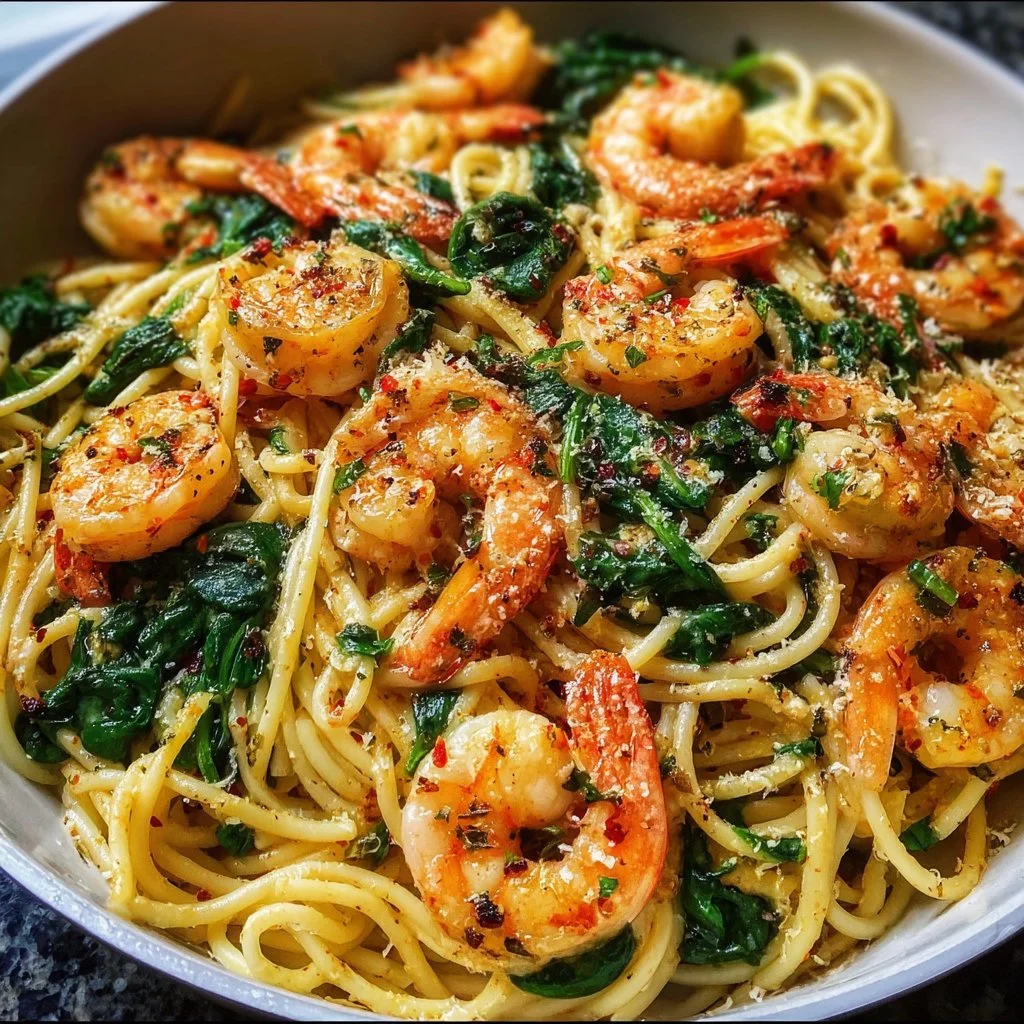
- Sear in batches: Heat a large pan over medium-high. Working in batches, add the shrimp to the pan (leaving some space between each shrimp). Cook 1-2 minutes per side, or until opaque. Remove from pan and place into a clean bowl. Visual cue: shrimp should be opaque and slightly curled, with a faint golden edge.
- Garlic and oil: Once shrimp are all cooked, add 1 more tablespoon of olive oil to the pan. Cook minced garlic, 2-3 minutes, until lightly browned and fragrant. Smell cue: garlic should give a warm, toasty aroma.
- Add greens: Add spinach and cook until wilted, about 1-2 minutes, stirring continuously. Texture cue: spinach should be glossy and just collapsed, not limp or watery.
- Finish off: Turn off heat. Add cooked pasta to the pan, along with lemon zest, lemon juice, remaining 2 Tbsp of olive oil, cooked shrimp, and fresh basil. Season with salt and pepper, and toss to combine. Taste and adjust seasoning.
Pro Tip: Patting the shrimp dry before seasoning gives you better color and keeps the pan from steaming; it’s a tiny step with a big payoff.
Helpful cooking tips
- Do the pasta last-minute: cook pasta while prepping other ingredients to keep everything hot and ready for tossing.
- Work in batches for shrimp: avoid crowding so each shrimp gets a quick, direct sear.
- Use the lemon zest at the end for the brightest aroma; the oil retains the flavor without bitterness.
- Keep minced garlic moving in the pan so it browns evenly, not burns.
- Reserve a splash of pasta cooking water if you want a looser finish; a small spoonful helps if the pan looks dry.
Best ways to enjoy it
Serve hot in shallow bowls, twirling pasta to show the shrimp and ribbons of basil. A light dusting of freshly grated parmesan provides savory contrast; a lemon wedge on the side lets diners brighten their portion. Pair with a crisp green salad or crusty bread for mopping up the garlicky oil.
How to store & freeze
Cool leftovers quickly, transfer to an airtight container, and refrigerate. Reheat gently so shrimp stay tender; avoid overcooking when warming. Refrigerate leftovers within 2 hours; reheat until steaming hot.
How to fix common issues
- If shrimp are overcooked and rubbery, gently shred and fold into pasta so flavors soften the texture.
- Bland sauce? Add a little more lemon juice and fresh basil to lift flavors, then finish with salt and pepper.
- Soggy spinach: wilt quickly and remove immediately; drain excess liquid from the pan before adding pasta.
- Oil separation: toss pasta over heat briefly to emulsify the oils back into a cohesive coating.
Recipe variations
- Protein swap: use the same seasoning method on sliced chicken breast or tofu; mark them optional.
- Cheese finish: top with Optional: fresh parmesan for salty richness.
- Herb switch: try parsley instead of basil for a different fresh note, marked optional.
- Heat level: increase or omit 1/2 tsp chili flakes to suit your spice preference, no amount added since amounts are given.
Common questions
Q: Can I use frozen shrimp straight from the freezer?
A: Thaw shrimp before cooking for even seasoning and a proper sear; thawing and patting dry helps prevent steaming and gives flavorful browning. If you must cook from frozen, they may release water and not brown as well, changing texture.
Q: Will the shrimp get rubbery if reheated?
A: Shrimp can become rubbery if overheated. Reheat gently and briefly so the interior warms through without additional cooking. Consider reheating the sauce and folding in leftover shrimp at the end to avoid repeated cooking.
Q: Can I make this ahead and reheat?
A: Yes, you can prepare pasta and components ahead, but combine them just before serving for the best texture. Eggs, dairy, and shellfish are present; handle leftovers with care and reheat until steaming.
Q: What pasta shapes work best?
A: Any dry pasta is fine; long strands like spaghetti or shorter shapes that catch bits of garlic and basil both work well. The key is about Approx. 5 ounces pasta, dry ((approx. 140 grams; enough for 2 people!)) for the proportions here.
Conclusion
If you want another perspective on this flavor combination, check the Walder Wellness lemon garlic shrimp pasta with spinach for additional notes and inspiration.
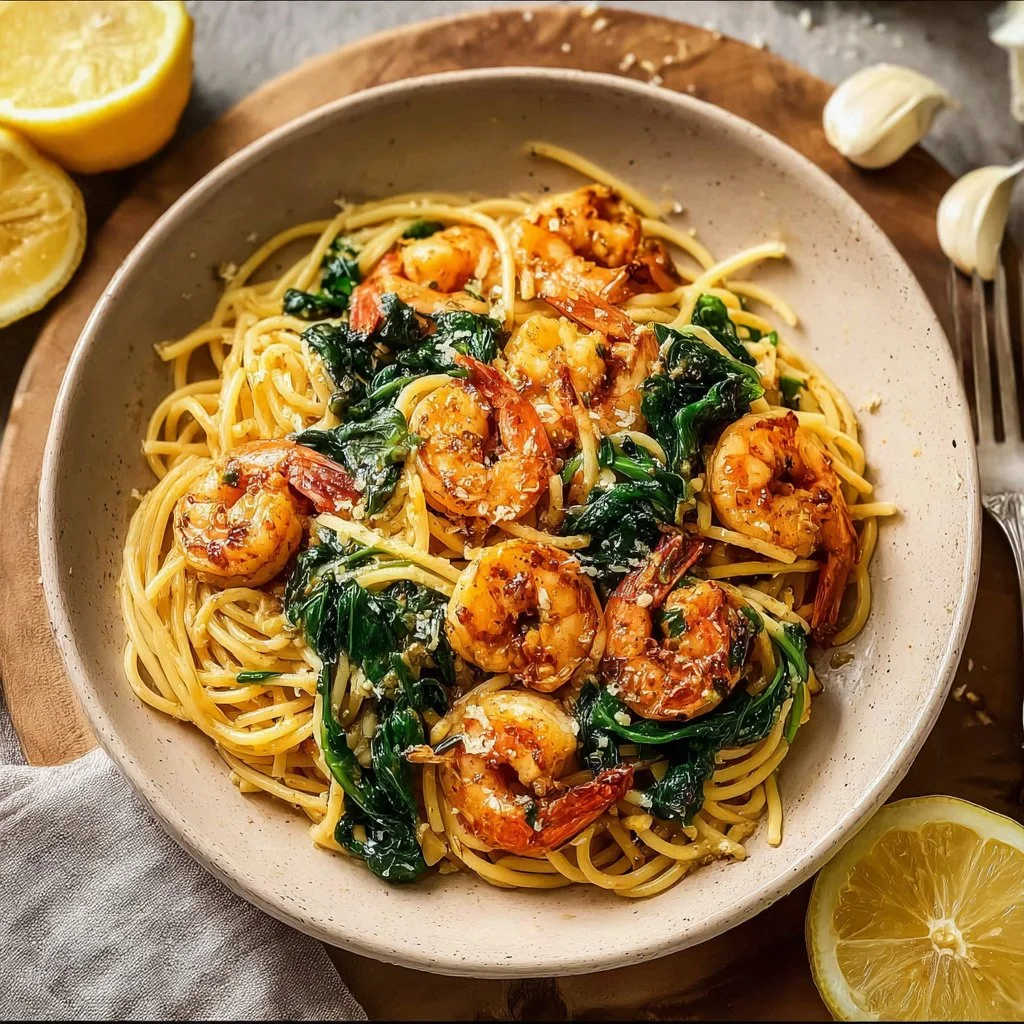
Lemon Garlic Shrimp Pasta
Ingredients
Method
- Thaw shrimp and remove tails and shells. Mince garlic. Zest lemon peel. Chop basil (or parsley).
- Bring a pot of water to boil for pasta. Cook according to package directions, then drain and return to pot.
- Pat shrimp dry with a paper towel. Toss with 1 Tbsp olive oil, smoked paprika, chili flakes, salt, and pepper. Set aside.
- Heat a large pan over medium-high. Cook shrimp in batches for 1-2 minutes per side until opaque. Remove and place into a clean bowl.
- Add 1 more tablespoon of olive oil to the pan. Cook minced garlic for 2-3 minutes until lightly browned.
- Add spinach and cook until wilted, about 1-2 minutes, stirring continuously.
- Turn off heat and add cooked pasta, lemon zest, lemon juice, remaining olive oil, cooked shrimp, and fresh basil. Toss to combine and adjust seasoning as needed.