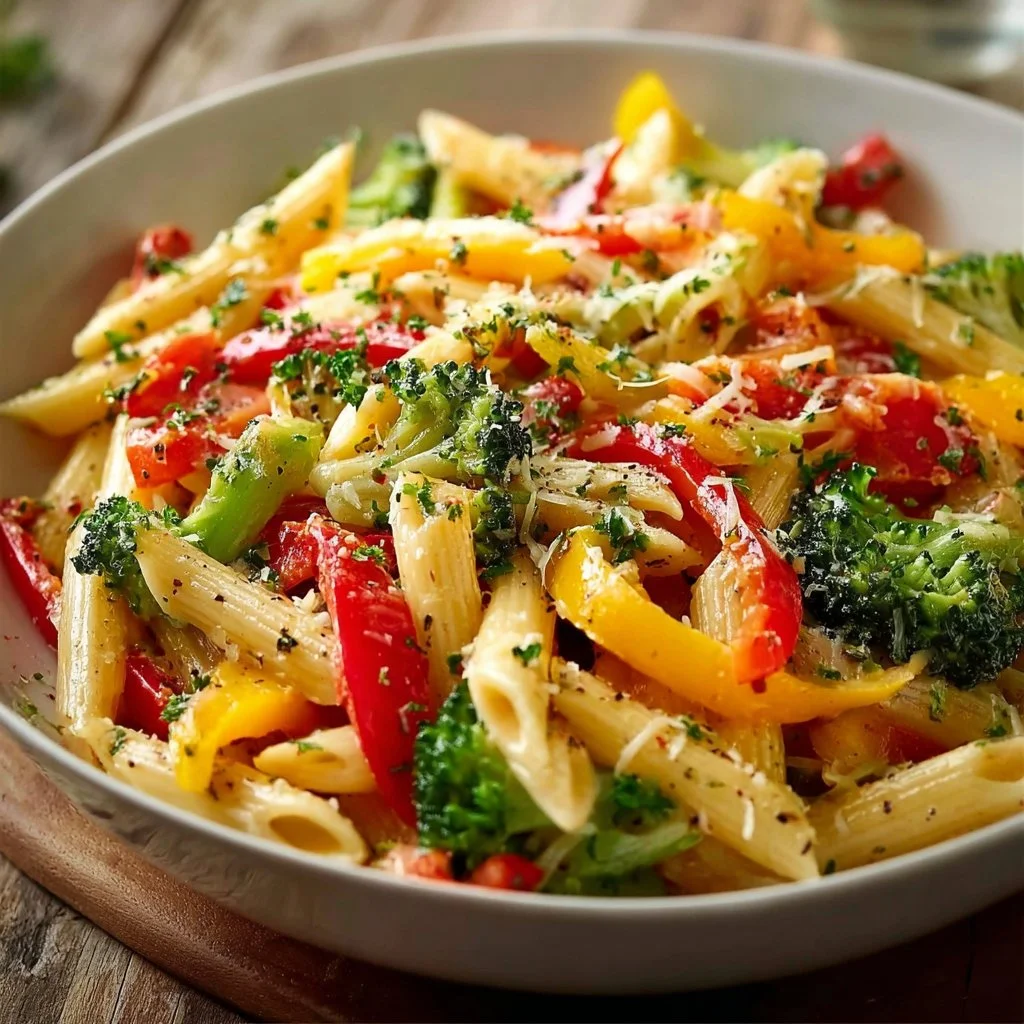
I still remember the first time I tossed bright, steaming pasta with tender-crisp vegetables and a lemony shave of Parmesan; the aroma of garlic and olive oil filled the kitchen and I felt instantly proud. Pasta primavera has become my go-to for nights when I want something vibrant, wholesome, and unfussy, and it fits weeknights and weekend dinners equally well. Image cue: Featured
If you love quick texture contrasts, bright citrus notes, and a silky, savory finish, this is for you. I sometimes pair it with a simple salad or grab inspiration from other finger-pleasing bites like these buffalo chicken bacon mozzarella bombs when guests arrive. Trust touch: if you need a dairy-free version, swap 1/2 cup Parmesan Cheese for nutritional yeast and taste as you go; note that Parmesan makes this contain dairy.
Why you’ll love pasta primavera
- Bright lemon flavor lifts every bite.
- Vegetables stay crisp-tender for contrast.
- Uses pantry staples and market produce.
- Quick cleanup; one skillet plus a pot.
- Flexible for dietary swaps.
"This pasta tastes like spring on a plate and comes together with little fuss."
How this recipe comes together
You cook the pasta, sauté a colorful mix of vegetables in olive oil with garlic and dried Italian seasoning, then toss everything with lemon juice and Parmesan for a glossy, bright finish. The method keeps vegetables lively and lets the pasta carry the sauce and flavors without heaviness. Image cue: First step
What you’ll need
- 8 oz Penne Pasta (can substitute with gluten-free or chickpea pasta)
- 1 medium Red Onion (or yellow onions/shallots)
- 1 medium Carrot (or parsnip)
- 2 cups Broccoli Florets (or asparagus/green beans)
- 1 medium Red Bell Pepper (or green/yellow/orange peppers)
- 1 medium Yellow Squash (or zucchini, can substitute with eggplant)
- 2 cloves Garlic (minced)
- 1 cup Grape Tomatoes (or cherry/sun-dried tomatoes)
- 1 tbsp Dried Italian Seasoning (can replace with fresh herbs)
- 2 tbsp Lemon Juice (or lime juice)
- 1/2 cup Parmesan Cheese (or nutritional yeast for dairy-free)
- 2 tbsp Fresh Parsley (for garnish)
- 2 tbsp Olive Oil (for sautéing)
- Salt (to taste)
- Red Pepper Flakes (optional, for serving)
Ingredient notes & swaps:
- Role: 8 oz Penne Pasta forms the chew and base; choose gluten-free or chickpea for sensitivity.
- Veg swaps: Broccoli Florets and Yellow Squash offer contrast; asparagus or green beans give similar snap.
- Dairy: Contains dairy from Parmesan; use nutritional yeast for a dairy-free alternative.
Image cue: Ingredients
How to make it
Start by cooking the pasta and building flavor in a hot pan with olive oil, garlic, and a mix of onions, carrots, peppers, broccoli, and squash; finish by tossing with lemon juice and Parmesan for a glossy, balanced dish.
- Cook 8 oz Penne Pasta until it reaches your preferred texture; drain and set aside, reserving a little pasta liquid if needed.
- Heat 2 tbsp Olive Oil in a skillet and soften 1 medium Red Onion and 1 medium Carrot until fragrant.
- Add 2 cloves Garlic (minced) and 1 tbsp Dried Italian Seasoning, stirring until aromatic.
- Stir in 2 cups Broccoli Florets, 1 medium Red Bell Pepper, and 1 medium Yellow Squash; sauté until vegetables are tender-crisp.
- Fold in 1 cup Grape Tomatoes so they warm and begin to blister slightly, then add cooked penne.
- Pour 2 tbsp Lemon Juice over the pasta, sprinkle 1/2 cup Parmesan Cheese, and toss until everything glazes and combines; season with Salt (to taste) and Red Pepper Flakes (optional).
Pro Tip: Finish by tossing off heat so the Parmesan melts into a silky coating rather than clumping.
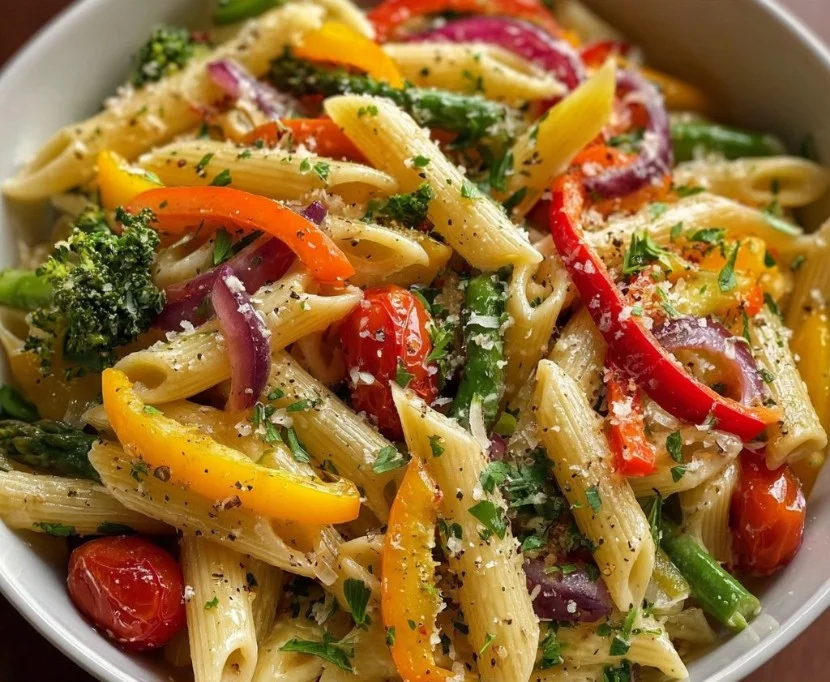
Visual doneness cues: vegetables should look bright with slightly softened edges; garlic should smell fragrant but not browned.
Helpful cooking tips
- Slice vegetables uniformly for even cooking and consistent texture.
- Keep vegetables slightly underdone; residual heat softens them to tender-crisp.
- Use lemon juice at the end to maintain brightness and avoid flattening flavors.
- Reserve a splash of pasta liquid if the dish needs loosening; it helps emulsify Parmesan.
Best ways to enjoy it
Serve pasta primavera warm, sprinkled with the 2 tbsp Fresh Parsley and extra Parmesan if desired. Pair it with crusty bread or a light green salad for a simple meal, or plate smaller portions as part of a vegetable-forward spread. Garnish with Red Pepper Flakes for heat, and drizzle a touch more Lemon Juice to brighten before serving. Image cue: Serving
Keeping leftovers fresh
Cool leftovers slightly before sealing in an airtight container and refrigerate; reheat gently until steaming, adding a splash of water or reserved pasta liquid to revive texture. Refrigerate leftovers within 2 hours; reheat until steaming hot. For dairy-free storage, note that nutritional yeast keeps texture lighter than melted cheese.
How to fix common issues
- If pasta is dry: add a little reserved pasta liquid or an extra drizzle of Olive Oil and toss to loosen.
- If flavors are flat: finish with more Lemon Juice and adjust Salt (to taste).
- If vegetables are soggy: next time sauté in smaller batches to avoid crowding the pan.
- If Parmesan clumps: stop cooking and toss off heat, letting residual warmth melt it into a smoother coating.
Flavor swaps
- Swap 1 tbsp Dried Italian Seasoning for fresh basil or parsley for a greener finish (optional).
- Use asparagus or green beans instead of Broccoli Florets for a seasonal twist.
- For a dairy-free option, replace Parmesan with nutritional yeast; add a bit more Lemon Juice to boost umami.
- Try chickpea pasta instead of penne if you want extra protein and a nuttier chew.
Common questions
Q: Can I make this gluten-free?
A: Yes. Use 8 oz Penne Pasta (can substitute with gluten-free or chickpea pasta) and follow the same steps. Be mindful that gluten-free pastas sometimes need different handling; toss warm to let sauce cling and taste for Salt (to taste).
Q: How do I keep vegetables crisp and not overcooked?
A: Slice evenly and sauté in a hot skillet using 2 tbsp Olive Oil, adding quick-cooking items later. Look for bright color and a slight bite; that crunch is the signature texture of pasta primavera.
Q: Can I prepare elements ahead of time?
A: You can chop vegetables and cook the pasta ahead, storing separately. Reheat vegetables quickly in a skillet to revive texture, then toss with warmed pasta, 2 tbsp Lemon Juice, and 1/2 cup Parmesan Cheese.
Q: Is this suitable for a dairy-free diet?
A: Yes. Replace 1/2 cup Parmesan Cheese with nutritional yeast; the dish will still have savory depth and the lemon will brighten the flavors.
Q: What tools make this easiest?
A: A large pot for the pasta and a roomy skillet for sautéing vegetables are most helpful; a sturdy spoon for tossing ensures even coating.
Conclusion
If you want a bright, flexible, and comforting vegetable-forward pasta, this interpretation captures everything I love about pasta primavera: color, texture, and an uplifting lemon finish. For a different take and inspiration, check out this Decadent Pasta Primavera to compare techniques and presentation.
Pasta Primavera
Ingredients
Method
- Cook the pasta in boiling water until al dente, then drain and set aside, reserving a little pasta liquid if needed.
- Heat olive oil in a skillet over medium heat. Add sliced red onion and carrot, sautéing until fragrant.
- Stir in minced garlic and dried Italian seasoning, cooking until aromatic.
- Add broccoli florets, red bell pepper, and yellow squash; sauté until vegetables are tender-crisp.
- Fold in grape tomatoes and sauté until they warm and blister slightly.
- Combine the cooked penne with the sautéed vegetables in the skillet.
- Pour lemon juice over the pasta, sprinkle with Parmesan cheese, and toss everything until well combined. Season with salt and add red pepper flakes if desired.