
I still remember the first time I slow-roasted a leg of lamb for a noisy holiday table; the kitchen filled with warm rosemary and garlic aroma, and guests kept drifting back for another forkful. This slow roast leg of lamb is forgiving, soulful, and hands-off, taking about 4.5 hours in the oven plus a final 45 minutes to brown, so plan a lazy afternoon and simple sides. If you enjoy slow, hands-off roasts, you might also like slow braised beef roast with cranberry balsamic glaze.
What makes this roast special is the contrast: a deeply browned outer crust and interior meat that pulls apart with a fork, all perfumed by unpeeled garlic and a whisper of rosemary. It’s built for family meals, special occasions, or any time you want a dramatic centerpiece with almost no last-minute fuss. Trust touch: Pat proteins dry for better sear.
Why you’ll love slow roast leg of lamb
- Deep, concentrated lamb flavor with gentle oven caramelization.
- Very hands-off once in the oven; perfect for hosting.
- Uses simple pantry items; no fancy marinades required.
- Easy to double as dinner and next-day sandwiches.
- Pan juices make an effortless gravy.
"Juicy, fragrant and worth the wait."
How this recipe comes together
This slow roast leg of lamb is seasoned, set over halved garlic and a quartered onion with rosemary, then roasted low and slow in a metal roasting pan with broth and water. After a long, gentle roast the lamb is turned, checked for tenderness, then returned uncovered to brown and finish. Resting and spooning pan juices before carving keeps it juicy.
What you’ll need for slow roast leg of lamb
- 2.25 kg / 4.5 lb leg of lamb , bone in (or shoulder) (Note 1)
- Salt and pepper
- 1.5 tbsp olive oil
- 1 whole garlic head (, unpeeled, cut in half horizontally)
- 1 onion (, quartered (unpeeled is fine))
- 2 rosemary sprigs ((2 = whisper of rosemary flavour, 4 sprigs = stronger flavour))
- 3 cups beef stock/broth (, low sodium (or homemade))
- 2 cups water
- 4 tbsp flour ((white))
- 1 cup water
- Salt and pepper (, to taste)
Ingredient notes & swaps:
- Garlic and onion act as an aromatic base and gentle support for the lamb as it roasts; leaving the garlic unpeeled softens its sweetness.
- Rosemary gives an herbaceous lift; use 4 sprigs for a stronger rosemary flavor or 2 for a subtler note.
- Low sodium beef stock/broth concentrates savory depth without over-salting; homemade or store-bought both work.
- Allergen notice: contains meat, and white flour is a wheat allergen.
Step-by-step instructions
This is a straightforward, low-and-slow roast: build a fragrant bed of aromatics, season the lamb, add stock and water, cover and slow roast until tender, then uncover to develop a deep brown crust before resting and making gravy.
- Preheat oven to 170°C/335°F (standard) or 150°C (fan). Place garlic, onion and rosemary in a metal roasting pan to form a flavor bed.
- Season lamb: Place lamb leg right side up in the pan. (Note 2) Sprinkle generously with salt and pepper and rub it in.
- Turn lamb over and place it so it mostly sits on the garlic and onion. Sprinkle with more salt and pepper, rub it in.
- Add liquids and cover: Drizzle lamb with olive oil. Pour broth and water around the lamb; it won’t cover it, that’s ok, the lamb sinks into it. Cover with foil (do not use a lid, you want a bit of liquid to steam out).
- Slow roast: Place in the oven and roast for 4.5 hours. Check for tenderness as below.
- Check meat: Remove from the oven, remove foil. Turn lamb over. Check it to ensure the meat is tender enough to pry a bit off easily with a fork. If not, return, covered, to oven.
- Brown lamb: Return uncovered lamb to oven for a further 45 minutes or until well browned.
- Rest: Remove lamb, spoon over pan juices generously. Transfer to serving platter, cover loosely with foil while you make the gravy (stays warm for 1 – 1.5 hours).
Pro Tip: Keep the foil loosely tented while resting to preserve a warm, moist interior and allow juices to redistribute before carving.
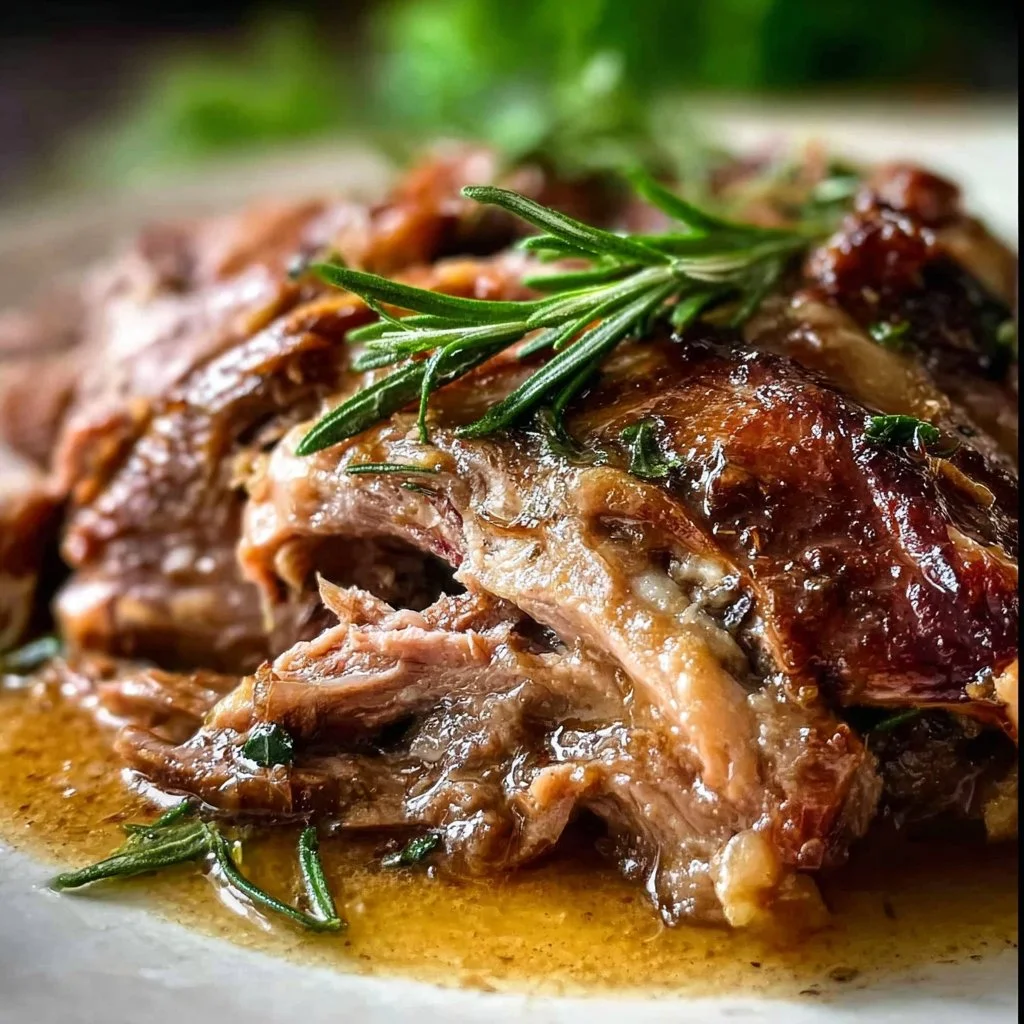
Visual doneness cues
- Look for the exterior to be a deep golden to mahogany brown and slightly crisp in places.
- Smell: the aroma should be a rich, savory mix of roasted lamb, garlic sweetness, and rosemary lift.
- Feel: when probed with a fork, the meat should yield easily and separate without resistance.
Helpful cooking tips
- Use a metal roasting pan for better heat conduction and easier browning.
- Leave the garlic unpeeled; once roasted it becomes sweet and spreadable.
- Don’t worry if the liquid doesn’t cover the lamb; steam and gentle braising happen from the shallow liquid and foil tent.
- Check tenderness with a fork rather than strictly by time; ovens and cuts vary.
- Save pan juices to make a simple gravy without extra drippings.
Best ways to enjoy it
Serve slices or pulled portions spooned with pan juices, with a simple green salad or roasted root vegetables. For a rustic platter, carve thick slices and scatter a few pan-roasted garlic cloves over the top; for sandwiches, shred cooled leftovers and toss with warm pan juices. A bright herb salad or lemony vegetable helps cut the richness.
Storage & reheating tips
Refrigerate cooled leftovers in a sealed container; reheat gently with a splash of the reserved pan juices to avoid drying out. For longer keeping, freeze in portioned containers with some gravy. When reheating, warm until steaming hot throughout to ensure enjoyable texture and food safety.
Refrigerate leftovers within 2 hours; reheat until steaming hot.
How to fix common issues
- Dry meat: Slice thinly and serve with extra pan juices, or reheat gently with added stock to restore moisture.
- Bland flavor: Spoon concentrated pan juices over slices and season each plate to taste with salt and pepper.
- Soggy exterior: If the crust softened while resting, quickly return slices to a hot oven to revive surface browning.
- Under-tender meat: If fork doesn’t pull meat, return to oven covered until it yields easily.
Recipe variations
- Optional: Use 4 rosemary sprigs instead of 2 for a stronger rosemary flavor.
- Optional: Substitute shoulder if you prefer a fattier, more forgiving cut; cook as directed.
- Optional: Finish the pan juices with a splash of acid like red wine vinegar or lemon juice before serving for brightness, added after the gravy is made.
Common questions
Q: Can I use a different cut like shoulder instead of leg?
A: Yes, a shoulder can be used and will be forgiving due to its higher connective tissue; the method remains the same, but always check tenderness with a fork rather than relying only on time.
Q: Should I remove the garlic skins before roasting?
A: No, keep the garlic unpeeled; the skins soften in the long roast, mellowing the garlic and making the cloves sweet and spreadable.
Q: How do I make the gravy from the pan juices?
A: After resting the meat, skim excess fat, then simmer the pan juices and stir in a simple slurry of 4 tbsp flour blended with 1 cup water to thicken, whisking until smooth; season to taste with salt and pepper.
Q: Is it okay if the broth doesn’t cover the lamb?
A: Yes, the recipe intentionally uses a shallow liquid bed; the lamb sinks slightly, and the combination of steam and braising produces tender meat without being submerged.
Conclusion
For a complete walkthrough and printable format, see the original RecipeTin Eats slow roast leg of lamb recipe.
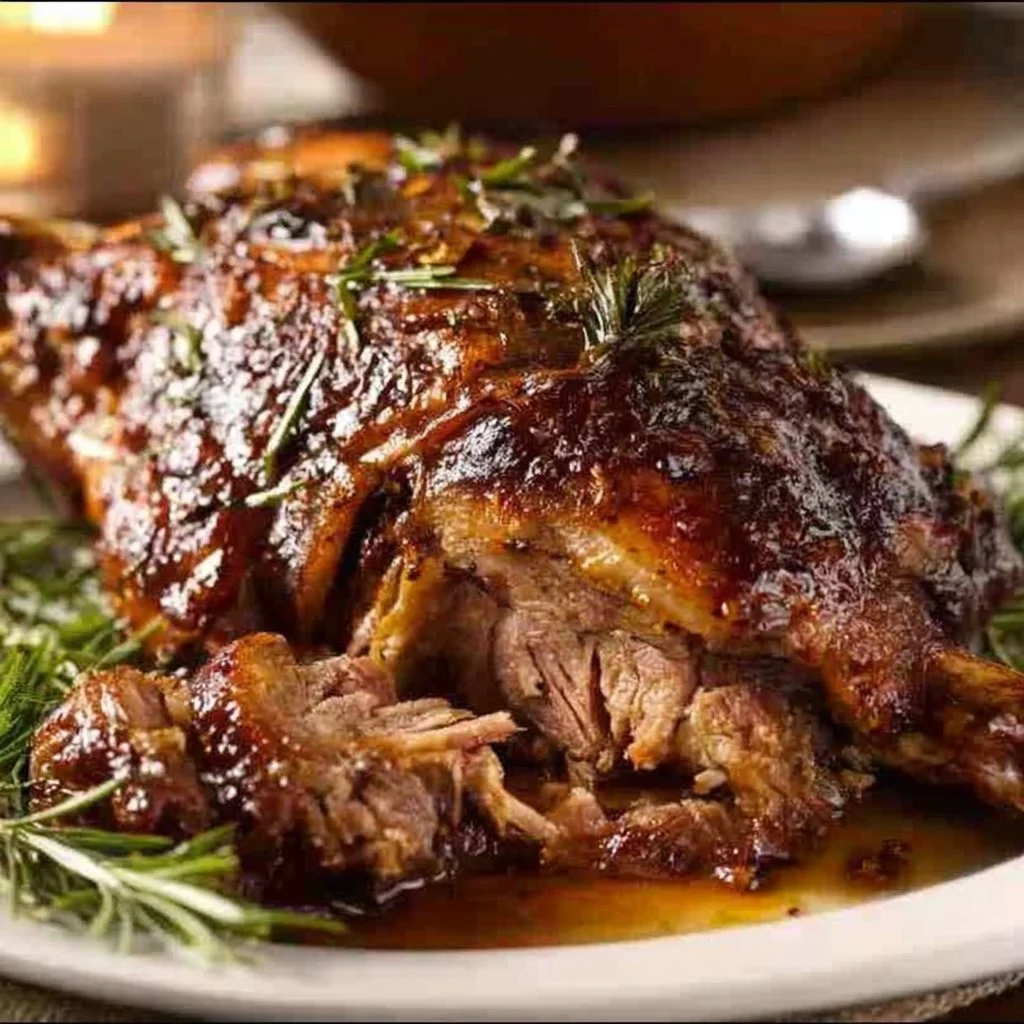
Slow Roast Leg of Lamb
Ingredients
Method
- Preheat oven to 170°C/335°F (standard) or 150°C (fan).
- Place garlic, onion, and rosemary in a metal roasting pan to form a flavor bed.
- Season the lamb: Place lamb leg right side up in the pan, sprinkle generously with salt and pepper and rub it in.
- Turn lamb over and place it so it mostly sits on the garlic and onion. Sprinkle with more salt and pepper, and rub it in.
- Drizzle lamb with olive oil. Pour broth and water around the lamb; it won’t cover it, that’s ok.
- Cover with foil (do not use a lid, you want a bit of liquid to steam out).
- Slow roast in the oven for 4.5 hours.
- Check tenderness: Remove from the oven, remove foil. Turn lamb over and check it is tender enough to pry a bit off easily with a fork. If not, return it covered to the oven.
- Return uncovered lamb to oven for a further 45 minutes or until well browned.
- Remove lamb, spoon over pan juices generously. Transfer to a serving platter, cover loosely with foil while you make the gravy.
- For the gravy, skim excess fat from the pan juices, then simmer and stir in a slurry of flour blended with water to thicken.