
I’m often asked how to make the perfect roast turkey, and let me tell you, it’s entirely possible to achieve perfectly cooked and moist turkey in one go! There’s something special about gathering around the table, with the aroma of a freshly roasted turkey wafting through the house. Whether it’s Thanksgiving, a family reunion, or a cozy dinner with friends, this roast turkey is a delightful centerpiece sure to impress.
What makes this turkey special is its juicy, flavorful meat infused with herbs, lemon, and onion, resulting in a palate-pleasing experience. It fits any occasion, whether you’re feeding a big group or just a few loved ones. You’ll feel like a culinary hero with the compliments you’ll receive!
Why you’ll love roast turkey
- Incredible flavor from fresh herbs and citrus
- Juicy and tender meat every time
- Simple preparation with step-by-step instructions
- A crowd-pleaser for any gathering
- Perfect for leftovers or sandwiches the next day
What ingredients do I need for roast turkey?
- 14-16 pound turkey, fresh or thawed
- 1 teaspoon salt (omit if turkey has been brined)
- 1 teaspoon pepper
- 1 lemon, quartered
- 1 medium onion, peeled and quartered
- 1-2 sprigs fresh parsley
- 1-2 sprigs fresh thyme
- 1-2 sprigs fresh rosemary
- 1-2 sprigs fresh sage
- 2-3 tablespoons olive oil or melted butter
Ingredient notes & swaps:
- Fresh herbs enhance flavor, but dried can be used in a pinch.
- You can swap lemon for orange for a sweeter taste.
- For those with nut allergies, ensure no cross-contaminated ingredients.
How do I make roast turkey step-by-step?
To roast a turkey, start by prepping the turkey, seasoning it well, and roasting it in a preheated oven while monitoring its temperature for doneness.
- Remove the turkey from the refrigerator and let it rest at room temperature for 30 minutes.
- Preheat the oven to 400 degrees and position the rack in the lowest setting. Coat a roasting pan and rack with cooking spray.
- Remove the neck and giblets from the turkey cavities; dispose of them or save for broth.
- Remove any metal or plastic clamps holding the legs together.
- Season the cavity with salt and pepper, and then stuff it with lemon, onion (reserve one onion quarter), and herbs.
- Overlap the skin to cover the cavity opening as much as possible and secure it with toothpicks or small skewers if needed. Tie the legs together with twine.
- Put the remaining onion quarter under the skin covering the neck cavity, and tuck the wing tips under the turkey body.
- Pat the turkey dry with a paper towel and brush the breast side with olive oil. Flip it breast side down onto the rack in the roasting pan and coat with olive oil.
- Roast in the oven uncovered. After the first hour, reduce the temperature to 350 degrees and roast for an additional hour for turkeys weighing 14 pounds or larger (smaller turkeys require 45 minutes).
- Remove the turkey and flip it over to be breast side up. Insert a remote probe thermometer into the thickest part of the thigh and return it to the oven. Set the thermometer alarm for 165 degrees.
- Keep an eye on the turkey as it cooks. If it starts to brown too quickly in the last hour, loosely tent it with aluminum foil to prevent burning.
- Once the thigh reaches 165 to 170 degrees, check the other thigh and breast’s temperature—the breast should be at least 160 degrees. If not, return it to the oven.
- For reference, cooking time is generally about 13 minutes per pound. A 14-16 pound turkey typically takes 2-1/2 to 3-1/2 hours to cook.
- When done, remove the turkey and cover it loosely with aluminum foil. Allow it to rest for 30 to 60 minutes before carving and serving.
Pro Tip: Use a meat thermometer for accuracy. Cooking times can vary based on the oven, so checking internal temperatures is crucial for juicy success.
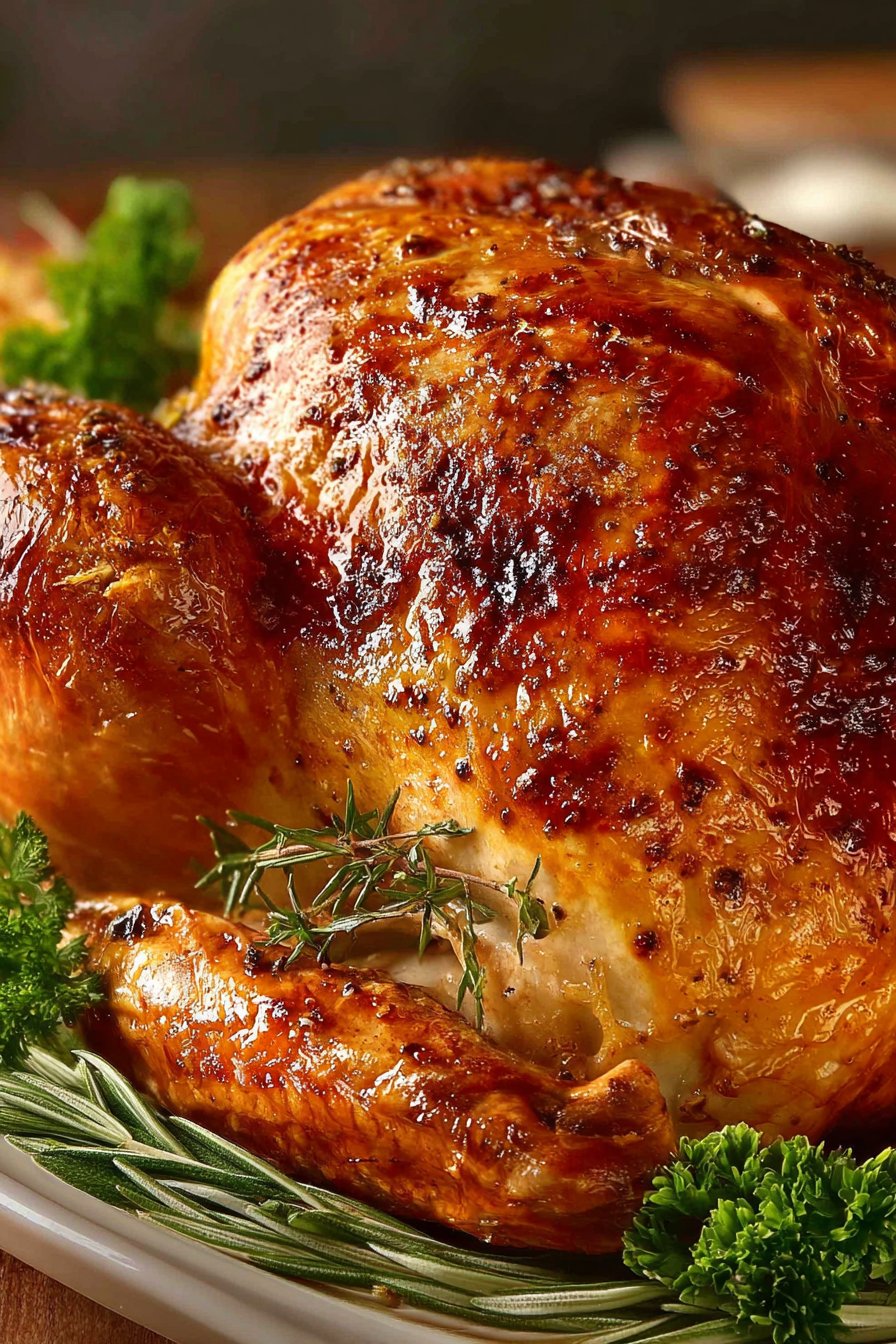
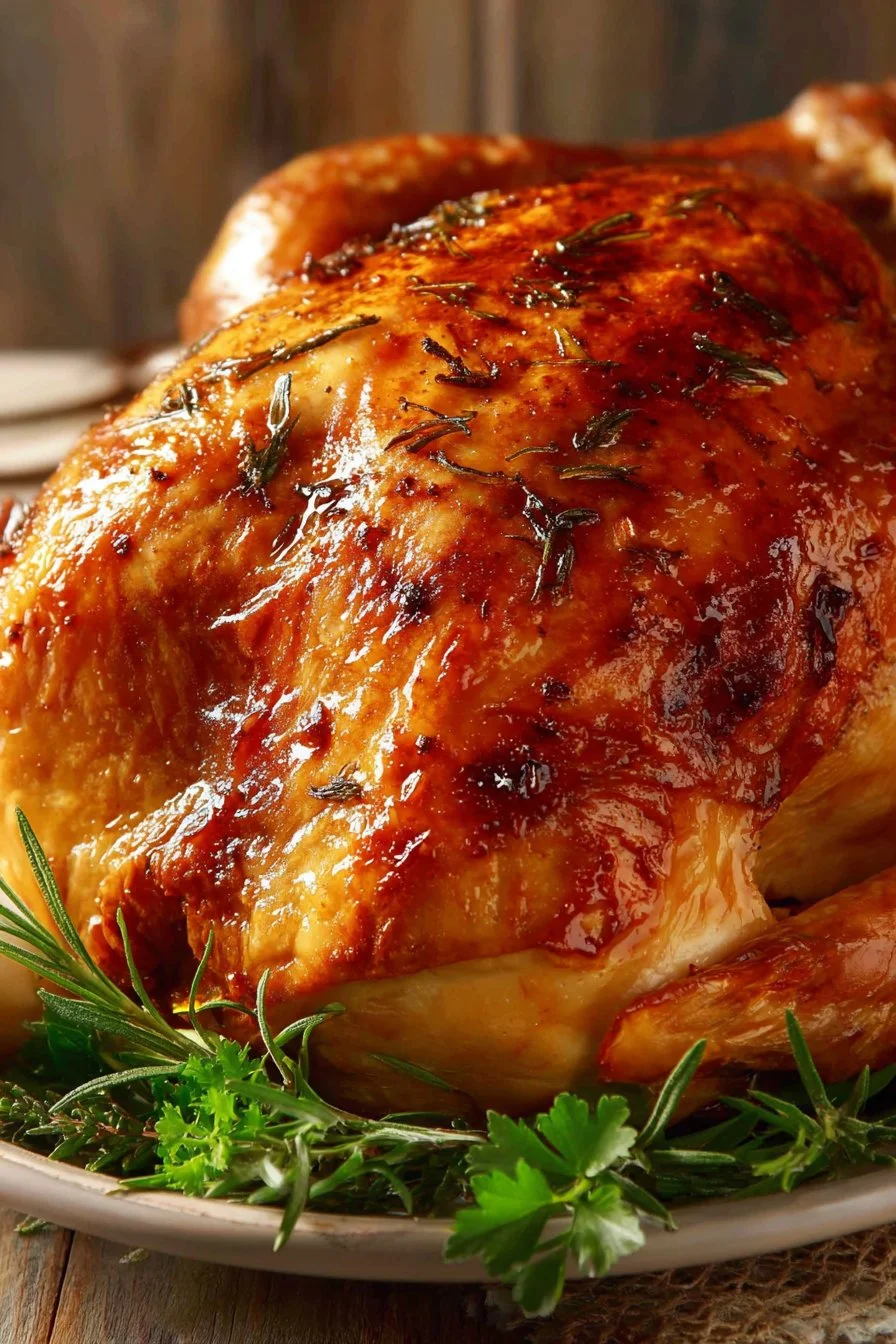
Visual doneness cues: Look for a golden-brown skin and juices running clear when pierced.
How should I serve it?
Serve the turkey sliced on a warm platter, garnished with fresh herbs for added color and aroma. Pair it with classic sides like fluffy mashed potatoes, cranberry sauce, and stuffing for a delightful feast everyone will relish.
Can I make it ahead? How do I store and reheat it?
You can prepare the turkey a day in advance by seasoning and stuffing it, then roasting just before you want to serve. Store leftovers in an airtight container in the refrigerator for up to three days. To reheat, cover with foil and warm in a 325-degree oven until heated through.
How do I fix common issues?
If your turkey is dry, consider basting it during cooking next time or using a brine beforehand. If the skin is over-browned, tent it with foil. For bland flavor, ensure you season the cavity well, and add herbs for depth.
What variations can I try?
You can experiment by adding different herbs or spices, such as garlic or paprika, to the seasoning. For a twist, try incorporating apple and cinnamon in the cavity for a sweeter aroma while roasting.
FAQs
Can I use frozen turkey?
Yes! Just ensure you thaw it fully in the refrigerator before cooking, which may take a few days depending on the weight.
Should I baste the turkey while it cooks?
Basting can help keep the meat moist, but it’s not necessary. The turkey will remain juicy if cooked properly; too much basting can extend cooking times.
How can I tell when the turkey is fully cooked?
Use a meat thermometer to check that the thickest part of the thigh reaches 165 degrees and the breast is at least 160 degrees.
What do I do with the carcass?
You can make a flavorful broth with the leftover carcass. Just simmer it with water, vegetables, and seasonings for a homemade stock.
How do leftovers keep?
Store turkey meat in an airtight container in the fridge for up to three days or freeze for longer storage. Just be sure to slice before freezing for easy portioning later.
Roast Turkey
Ingredients
Method
- Remove the turkey from the refrigerator and let it rest at room temperature for 30 minutes.
- Preheat the oven to 400 degrees and position the rack in the lowest setting. Coat a roasting pan and rack with cooking spray.
- Remove the neck and giblets from the turkey cavities; dispose of them or save for broth.
- Remove any metal or plastic clamps holding the legs together.
- Season the cavity with salt and pepper, and then stuff it with lemon, onion (reserve one onion quarter), and herbs.
- Overlap the skin to cover the cavity opening as much as possible and secure it with toothpicks or small skewers if needed. Tie the legs together with twine.
- Put the remaining onion quarter under the skin covering the neck cavity, and tuck the wing tips under the turkey body.
- Pat the turkey dry with a paper towel and brush the breast side with olive oil. Flip it breast side down onto the rack in the roasting pan and coat with olive oil.
- Roast in the oven uncovered. After the first hour, reduce the temperature to 350 degrees and roast for an additional hour for turkeys weighing 14 pounds or larger (smaller turkeys require 45 minutes).
- Remove the turkey and flip it over to be breast side up. Insert a remote probe thermometer into the thickest part of the thigh and return it to the oven. Set the thermometer alarm for 165 degrees.
- Keep an eye on the turkey as it cooks. If it starts to brown too quickly in the last hour, loosely tent it with aluminum foil to prevent burning.
- Once the thigh reaches 165 to 170 degrees, check the other thigh and breast's temperature—the breast should be at least 160 degrees. If not, return it to the oven.
- For reference, cooking time is generally about 13 minutes per pound. A 14-16 pound turkey typically takes 2-1/2 to 3-1/2 hours to cook.
- When done, remove the turkey and cover it loosely with aluminum foil. Allow it to rest for 30 to 60 minutes before carving and serving.