
Turkey gravy is a wonderful companion to any holiday table, especially when drippings are absent. I remember occasions when I needed a quick, delicious gravy to elevate my Thanksgiving feast, and this easy turkey gravy without the drippings was a lifesaver. It takes only a few minutes to whip up, making it perfect for any gathering or weeknight dinner.
This recipe is special because it has a rich, velvety texture and robust flavor, ensuring that your mashed potatoes or turkey are never left waiting for a delicious topping. It’s great for anyone looking for a simple solution that doesn’t sacrifice taste or quality.
Why you’ll love turkey gravy without the drippings
- Quick and easy to make
- Smooth, velvety texture
- Budget-friendly ingredients
- Versatile and customizable
- Perfect for make-ahead planning
What ingredients do I need for turkey gravy without the drippings?
- 4 cups turkey broth
- ½ cup unsalted butter
- ½ cup all-purpose flour
- 1 teaspoon salt
- ½ teaspoon pepper
Ingredient notes & swaps:
- Unsalted butter helps control the salt level; you can use salted butter, just reduce the added salt.
- If you need a gluten-free option, substitute all-purpose flour with a gluten-free flour blend.
- Use chicken broth if you don’t have turkey broth on hand.
How do I make turkey gravy without the drippings step-by-step?
To make turkey gravy without the drippings, start by warming the turkey broth in a medium saucepan. In a large skillet, melt the butter, then whisk in the flour until it turns a light brown. Gradually add the warm broth to the mixture while whisking continuously. Season with salt and pepper to taste.
- Pour turkey broth into a medium saucepan and heat until warm—just steamy, not boiling.
- In a large skillet, melt the unsalted butter over medium heat.
- Sprinkle the flour over the melted butter and whisk constantly until it turns light brown and fragrant.
- Gradually add warm broth a ladle at a time, whisking continuously to avoid lumps.
- Aim for a thinner gravy as it will thicken while cooling; if preparing ahead, reserve some broth for reheating. Add salt and pepper to taste.
Pro Tip: If your gravy becomes too thick while cooling, you can simply whisk in a bit of reserved broth when reheating.
How should I serve it?
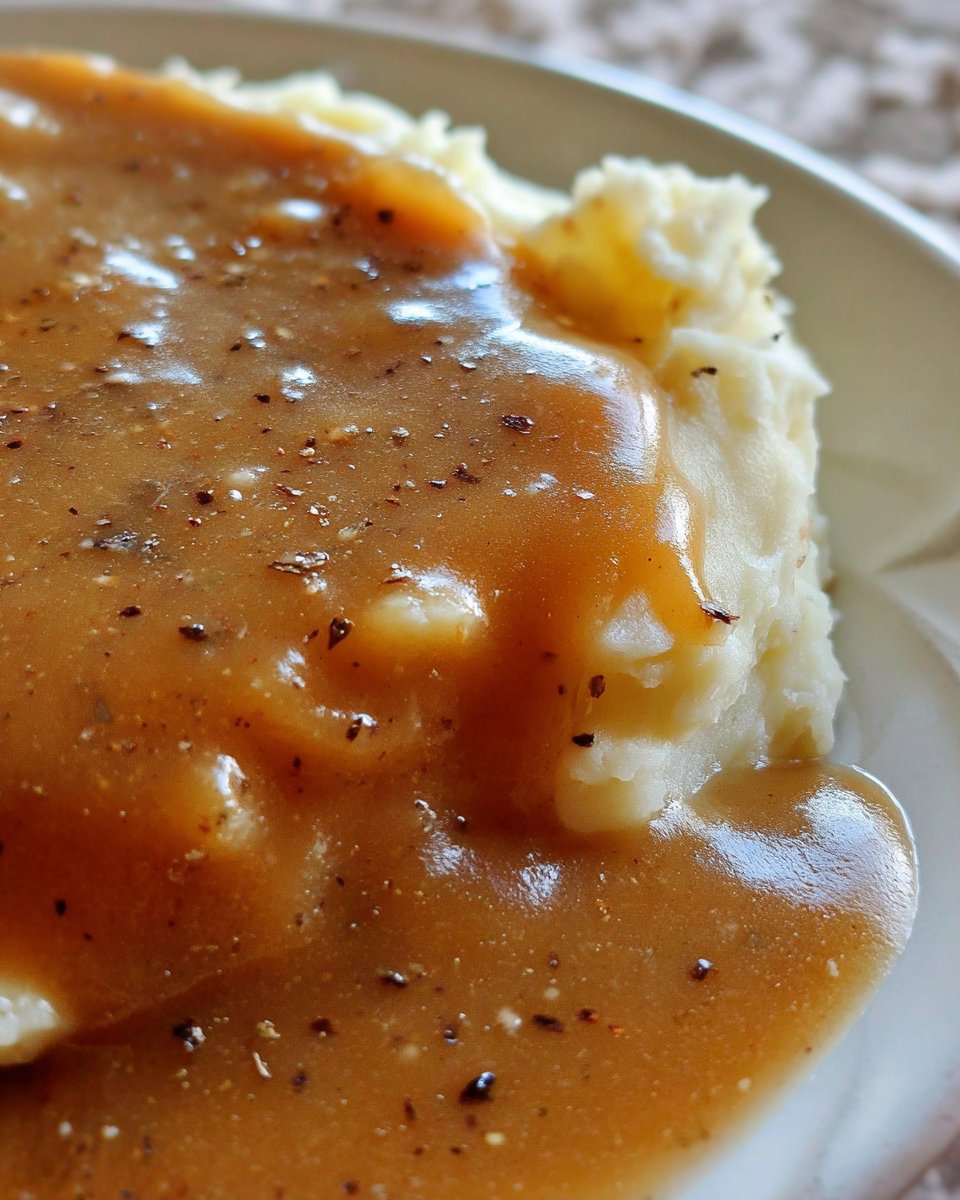
Serve this rich turkey gravy over freshly made mashed potatoes, roasted turkey, or any meat you prefer. You can garnish with freshly cracked black pepper or herbs like thyme or parsley to add a touch of freshness and color.
Can I make it ahead? How do I store and reheat it?
Absolutely! You can make this gravy ahead of time. Store it in the refrigerator for up to four days in an airtight container. To reheat, pour the gravy into a saucepan and warm it over medium heat, adding a splash of turkey broth until it reaches your desired consistency.
How do I fix common issues?
If your gravy is too thick, whisk in a little more broth until it reaches the right consistency. If it tastes bland, consider adding extra salt or pepper. Should it become lumpy, continue whisking vigorously, or blend it to smooth it out.
What variations can I try?
You can try adding sautéed onions or garlic for added depth. For a creamier touch, incorporate heavy cream after the broth. To infuse additional flavor, consider adding herbs such as sage or rosemary during the cooking process.
FAQs
Can I use a different type of broth?
Yes, chicken broth or vegetable broth can be substituted for turkey broth if needed.
How long can this gravy be stored?
Stored in the refrigerator, this gravy can last up to 4 days.
Can I freeze turkey gravy?
Yes! Freeze the gravy in suitable containers for up to 2 months. Just thaw and reheat before serving.
What can I do if my gravy is too salty?
If excess salt is an issue, you can balance it with a splash of cream or add a bit of unseasoned broth to dilute the saltiness.
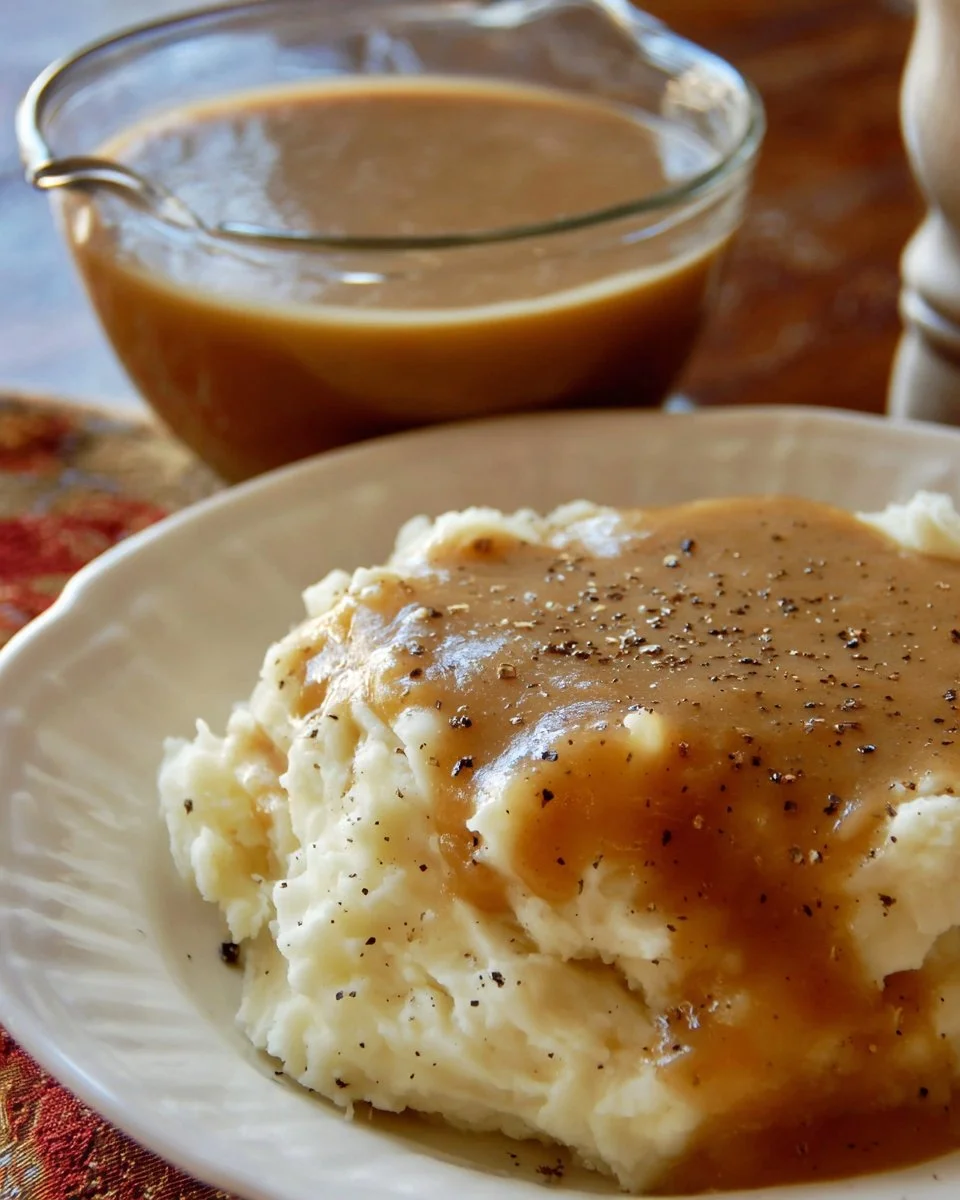
Turkey Gravy
Ingredients
Method
- Pour turkey broth into a medium saucepan and heat until warm—just steamy, not boiling.
- In a large skillet, melt the unsalted butter over medium heat.
- Sprinkle the flour over the melted butter and whisk constantly until it turns light brown and fragrant.
- Gradually add warm broth a ladle at a time, whisking continuously to avoid lumps.
- Aim for a thinner gravy as it will thicken while cooling; if preparing ahead, reserve some broth for reheating.
- Add salt and pepper to taste.